
Mestre: Strategic Gateway to Venice
Mestre is a lively and dynamic city that you will easily come to love upon closer acquaintance. Most visitors pass through here on their way to Venice or when transferring to national and international train or bus connections. However, it is not just a transit hub. The city itself offers a number of places worth visiting. The ancient centre, tree-lined streets, expansive city parks, as well as a monumental brutalist church or a modern museum with an interactive immersive exhibition, create an interesting image of a city that has retained its character.

Mestre, the largest part of the mainland area of Venice, has approximately 90,000 inhabitants and forms their key background. It is connected to the historic city centre by the 3.5 km long Bridge of Liberty (Ponte della Libertà), which allows a smooth connection across the lagoon. The city is characterised by a diverse infrastructure, from green spaces and modern architecture to shopping centres and an extensive network of services. Development in the second half of the 20th century, especially in connection with the Marghera industrial zone, transformed Mestre into a functional urban centre with excellent connections to the entire Venice area.
A Brief Look into History
The area of today’s Mestre was inhabited as early as prehistoric times. In ancient times, there was a Roman oppidum here, which was probably destroyed by Attila. The settlement was restored in the 10th century. In the Middle Ages, a fortified castle and a port serving as the gateway for Venice to the mainland were established here. The importance of the port was increased by the construction of the Canal Salso, which provided a direct water connection with the lagoon. After being annexed to Venice in 1926, Mestre gradually transformed into its main mainland background.
Architecture
Mestre experienced its greatest transformation after World War II. In the 1950s and 1960s, the city expanded rapidly and often uncoordinatedly, with new districts and the Marghera industrial zone emerging. Many historical parts were demolished or rebuilt, and the centre long served mainly as a transport hub. In recent decades, however, it has undergone gradual revitalisation, restoring dignity to places like Piazza Ferretto, Via Palazzo, and Torre dell’Orologio.


Monuments and Points of Interest
Piazza Ferretto
The main square is now a pleasant pedestrian zone with cafes, shops, and cultural life. Revitalisation in the 1990s transformed the previously crowded transport hub into a welcoming place for meetings and markets. The dominant feature of the square is the Torre dell’Orologio – a clock tower, a remnant of medieval fortifications, which recalls the time when Mestre was a fortified city with walls and gates.
Via Palazzo
A historic street leading from Piazza Ferretto. After reconstruction, its level was lowered to approximate its original appearance. Today, it is a pedestrian zone with shops and cafes, retaining its older scale and atmosphere.
Corso del Popolo
Corso del Popolo is the main avenue on the southeastern edge of Mestre’s centre, near the train station. It is lined with greenery, and you will find hotels, restaurants, cafes, and bistros here. Arcaded sidewalks run along the street, and you will also find shops and services, including a supermarket.
Canal Salso and Marzenego
Waterways were once the lifeblood of the city. Canal Salso, built in the 14th century, connected the lagoon directly with Mestre. Today, it is partially filled in, but its line still influences the shape of the city. The Marzenego River branches and winds through the centre of Mestre, reminding one of the ancient commercial and defensive functions of the waterways.
Church of Sacro Cuore


Among the notable examples of post-war architecture in the city is the church Sacro Cuore di Gesù Re della Gloria, built in the 1960s and opened in 1971. It is a typical example of the modernist style of the time with prestressed reinforced concrete and characteristic high “sails” that form its silhouette. The interior is a large open space without columns, illuminated by a large colourful glass wall. The church is still functional and serves the local community. Interestingly, the construction uses the same prestressed concrete technology as the Morandi Bridge in Genoa, which means it requires careful and costly maintenance and regular inspection.


Htm Hybrid Tower
At the intersection of Corso del Popolo and Via Torino stands the modern high-rise building Htm Hybrid Tower, a new landmark of Mestre, 81 meters high with 19 floors. It combines various functions – common areas, apartments with panoramic windows (4th–11th floor), and luxury apartments with large terraces (12th–16th floor) overlooking Mestre and the lagoon. The top floors feature an elegant restaurant with a terrace and a 360° panorama. The Venezia Mestre train station is approximately a 10-minute walk away, and there is a bus stop to Venice, as well as various shops nearby. Street parking is paid.
Museo M9
On Ferretto Square in the centre of Mestre is located Museo M9, a modern museum dedicated to 20th-century Italy. It offers an interactive and multimedia exhibition divided into several thematic sections, showcasing the country’s social, political, and cultural changes. The building was opened in 2018 and consists of modern architecture sensitively connected with restored historical objects. Museo M9 is also a cultural centre with public space, cafes, and an event hall.


Parks and Greenery
Mestre has long struggled with a lack of greenery, but since the 1980s, large city parks like Parco Bissuola or Parco Piraghetto have been created. A major attraction is also Park San Giuliano – a vast lagoon park with views of Venice, ideal for picnics, walks, or concerts. The Bosco di Mestre project is also interesting, connecting smaller forests, groves, and parks into a green ring around the city.
Hospital Ospedale dell’Angelo
On the western edge of Mestre, in the Zelarino area, is located the modern hospital Ospedale dell’Angelo. It features distinctive contemporary architecture and an interior with a large atrium full of greenery, reminiscent of a botanical garden, enhancing the environment for patients and staff. It is one of the largest and best-equipped healthcare facilities in the region.
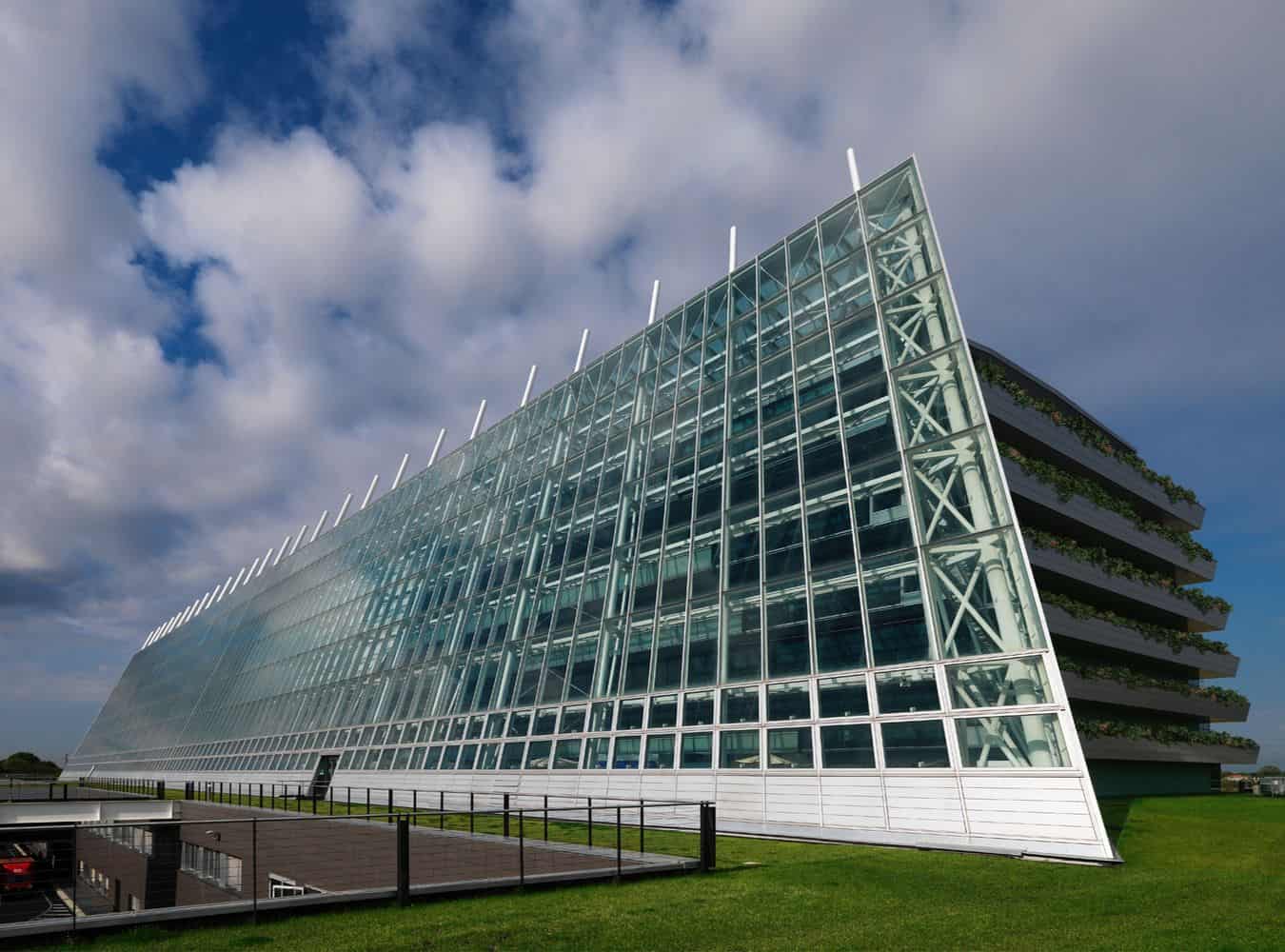
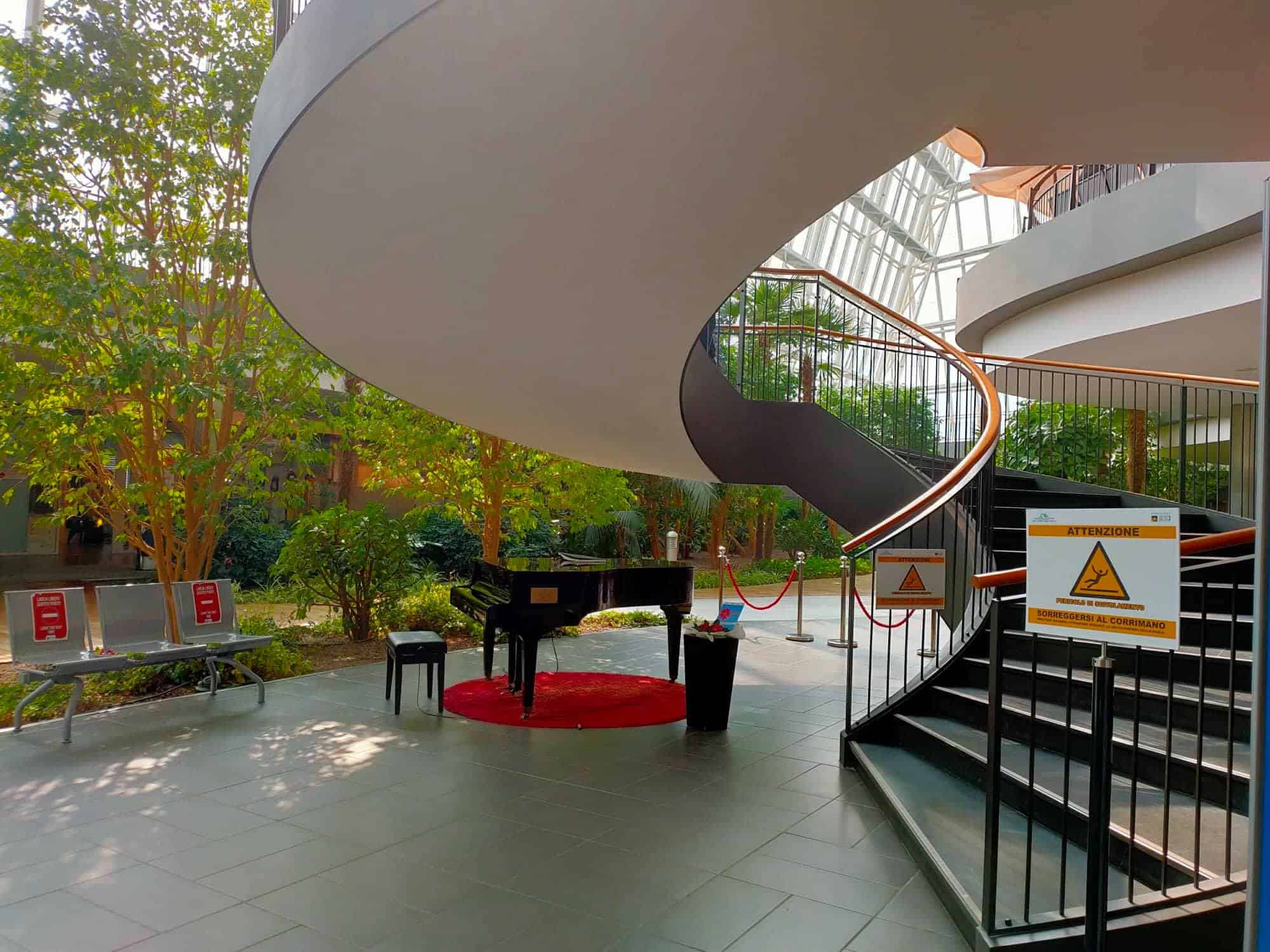

The western edge of the city is characterised by newer construction and lower density of development. The area around Zelarino shows how Mestre is gradually transforming – from a settlement mainly oriented towards transit and industry into a place that offers a quality urban environment for everyday life, families, and workers commuting to the wider Venice area.
Accommodation
Mestre is popular among tourists looking for more affordable accommodation when visiting Venice. Around the main train station, Venezia Mestre, there is a wide range of hotels and guesthouses in various price categories – from cheap hostels and family pensions to modern four-star hotels. This location is strategic for short and longer stays due to excellent transport connections: within minutes, you can reach Venice’s Santa Lucia by train or bus, from where you can explore the historic centre on foot. Many visitors choose Mestre also for easy parking and easier access to the Marco Polo airport.
Transport Connections
Mestre is the main transport hub of the mainland part of Venice.
Rail Transport
The train station has 13 platforms and handles tens of thousands of passengers daily. Trains run very frequently directly to the historic centre of Venice at Santa Lucia station – the journey across the Ponte della Libertà takes approximately 10 minutes and offers a convenient connection with the lagoon. From Mestre, long-distance and high-speed trains also depart to Milan, Rome, Florence, Bologna, Verona, or Trieste, and international connections with transfers or direct lines to Austria, Germany, Switzerland, or Croatia.
The station offers luggage storage, open most of the day, and self-service lockers in front of the opposite parking building, which is useful, for example, when you want to use a several-hour transfer break for short stops and trips, such as by train to Venice.
Bus Transport
In addition to the train, you can comfortably reach Venice by ACTV buses from Piazzale Roma or long-distance lines from the bus station in Mestre, from where international connections also run, for example, to Ljubljana, Vienna, Munich, Berlin, or Prague.
Air Transport
Marco Polo Airport is approximately 10 km away and is connected to Mestre by direct ACTV and ATVO buses with a journey of around 20 minutes. The second airport in Treviso is approximately 22 km away and is accessible by direct ATVO buses or FlixBus in 35–55 minutes.
Our Tip: Trip from Mestre to Venice


Frequent regional trains run directly from the main station, Venezia Mestre to Venezia Santa Lucia. The journey across the Ponte della Libertà takes only 10 minutes. It is the fastest and most convenient way to get to the centre of Venice.
From Santa Lucia station to St. Mark’s Square, it is approximately 2.5 km on foot, and the journey takes about 30–40 minutes. However, if you stop, take photos, and enjoy the sights, expect it to take an hour to an hour and a half.
Venezia Santa Lucia
Venezia Santa Lucia is the only train station directly in historic Venice. Trains arrive here via the Ponte della Libertà from Mestre. The exit is directly on the waterfront at the Canal Grande, where a view of the church of San Simeone Piccolo with its green dome opens up. From here, you can continue on foot into the city or use the vaporetto along the Canal Grande.