
Vicenza: Andrea Palladio and monumental Renaissance architecture
Vicenza
When you enter the historic centre of Vicenza, the first thing that will surprise you is the monumentality of the local buildings. Many palaces and public buildings impress not only with their size, but also with the wealth of architectural details. Statues, columns, balconies, portals, and richly decorated façades remind you that you are in one of Italy’s most important Renaissance cities. Vicenza is a city that stays in most visitors’ memories after their first visit. It is not uncommon for people to return repeatedly, gradually discovering further layers of history, architecture, and Andrea Palladio’s work.
Although Vicenza is often in the shadow of Venice or Verona, it was here that architecture was created that influenced the form of buildings not only in Europe, but also around the world. The historic centre, together with the Palladian villas scattered across the Veneto, is inscribed on the UNESCO World Heritage List under the name “City of Vicenza and the Palladian Villas of the Veneto”.
Vicenza has more than 110,000 inhabitants and lies between the Alpine foothills and the Monti Berici hills west of Padua. The diversity of the surrounding landscape gives it a distinctive character and panoramic views.
The city’s history dates back to the 3rd century BC. Thanks to its location on an important trade route between Milan, Aquileia, and Trieste, it belonged for centuries among the major centres of northern Italy. It experienced its greatest flourishing in the 16th century, when the architect Andrea Palladio worked here.

An engaging walk through the historic centre
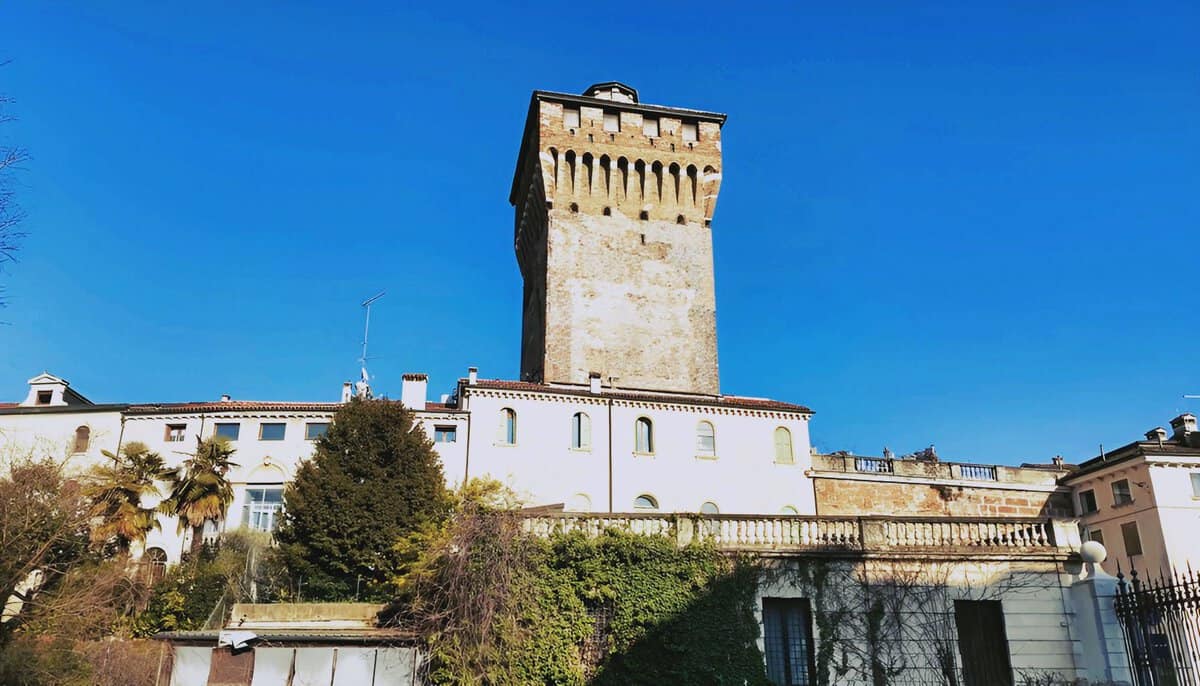
The starting point for a walk through the historic centre this time will be Corso Andrea Palladio, the city’s main avenue lined with Renaissance palaces, shops, cafés, and restaurants. From here you can continue toward Palazzo Chiericati and the famous Teatro Olimpico. Both buildings are among Andrea Palladio’s most important works and are located just a few steps apart.
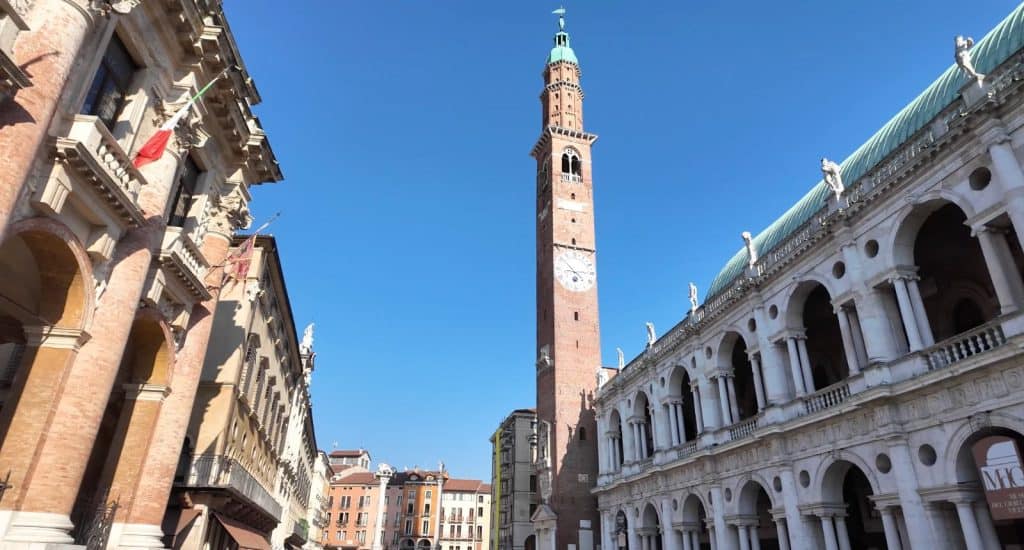
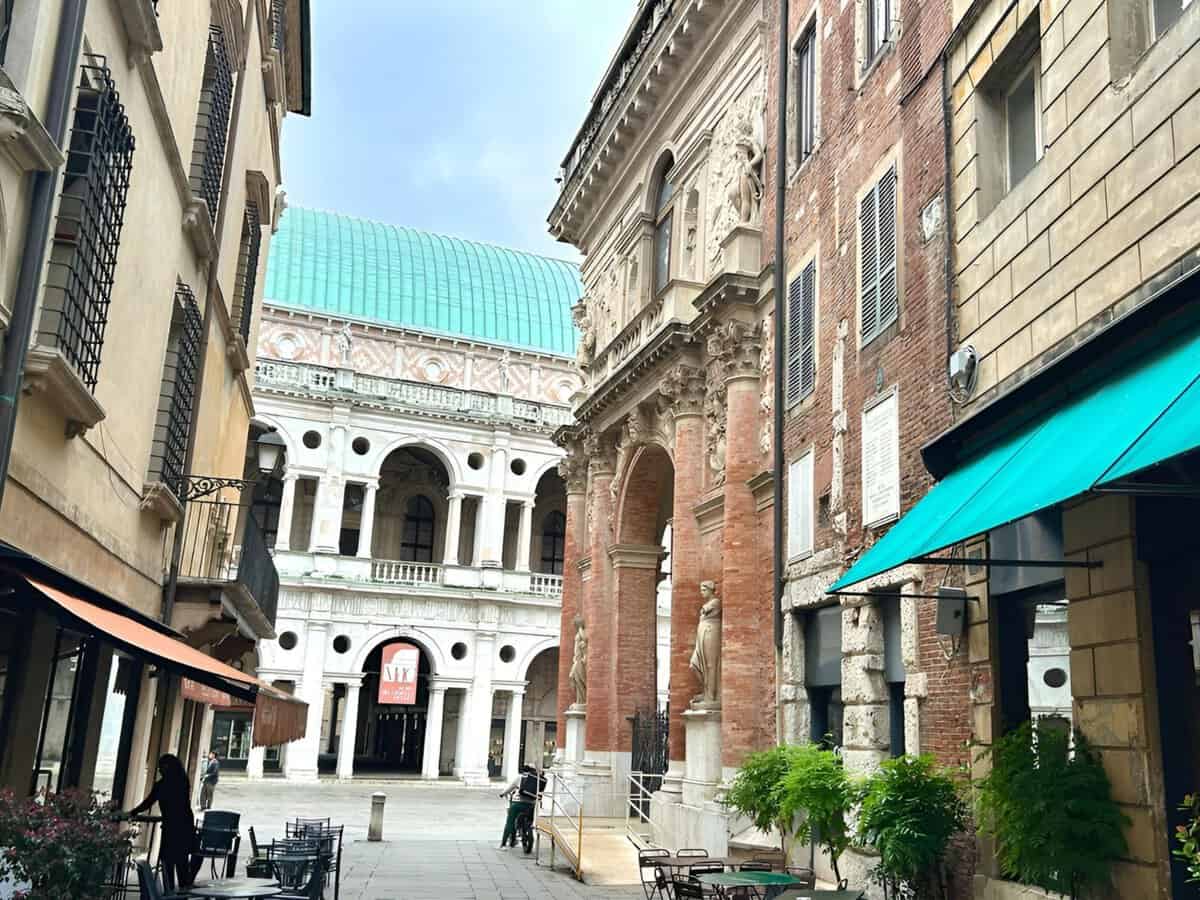
Between Palazzo Chiericati and Teatro Olimpico, after a few minutes’ walk along streets lined with beautiful houses, palaces, and churches, you will reach Piazza dei Signori, Vicenza’s best-known square. It is precisely here that the greatest concentration of architectural gems in the city is found. In one place stand the Basilica Palladiana, Torre Bissara, Loggia del Capitaniato, and several other historic buildings.
This route is among the most frequented. Over a relatively short stretch, you will pass the most important sights that belong to the historic centre.
Who was Andrea Palladio?
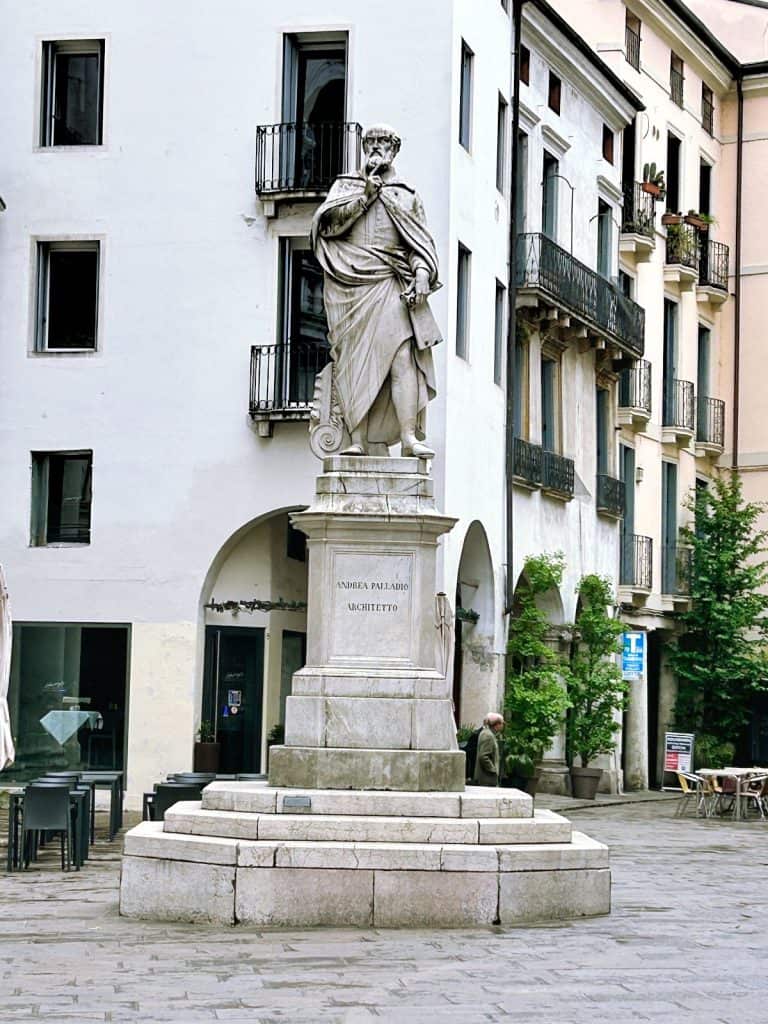
Andrea Palladio (1508–1580) is considered one of the most influential architects of all time. He was born in Padua and spent most of his life working in Vicenza and its surroundings. His work drew on ancient Roman architecture and became the foundation of an architectural movement known as Palladianism.
He is described as the first architect of Renaissance classicism. His buildings are characterised by symmetry, balanced proportions, and the use of architectural elements borrowed from ancient temples. As one of the first architects, he began using columned façades, triangular pediments, and monumental entrances not only for temples, but also for urban palaces and country villas.
His designs influenced architecture for several centuries and inspired builders all over the world. To this day, Vicenza is considered the main centre of Palladian architecture and one of the most important Renaissance cities in Italy.
The most important monuments in Vicenza’s historic centre
Most of the main sights are within walking distance of each other, so the city can be comfortably explored in a single day.
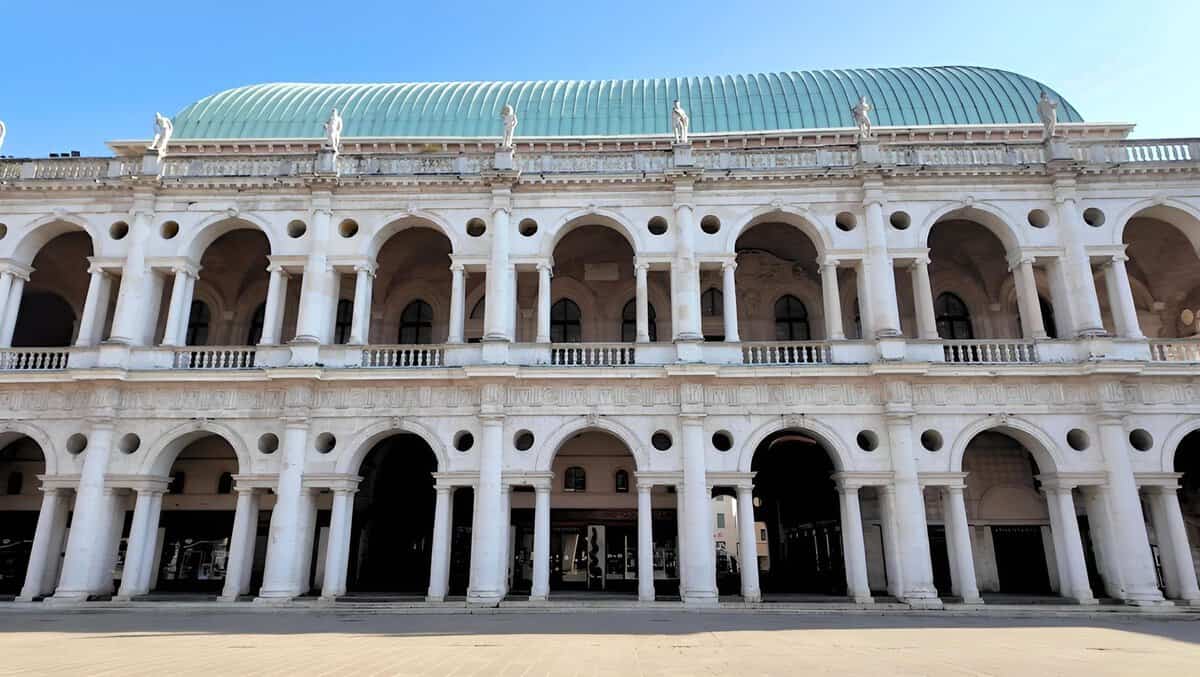
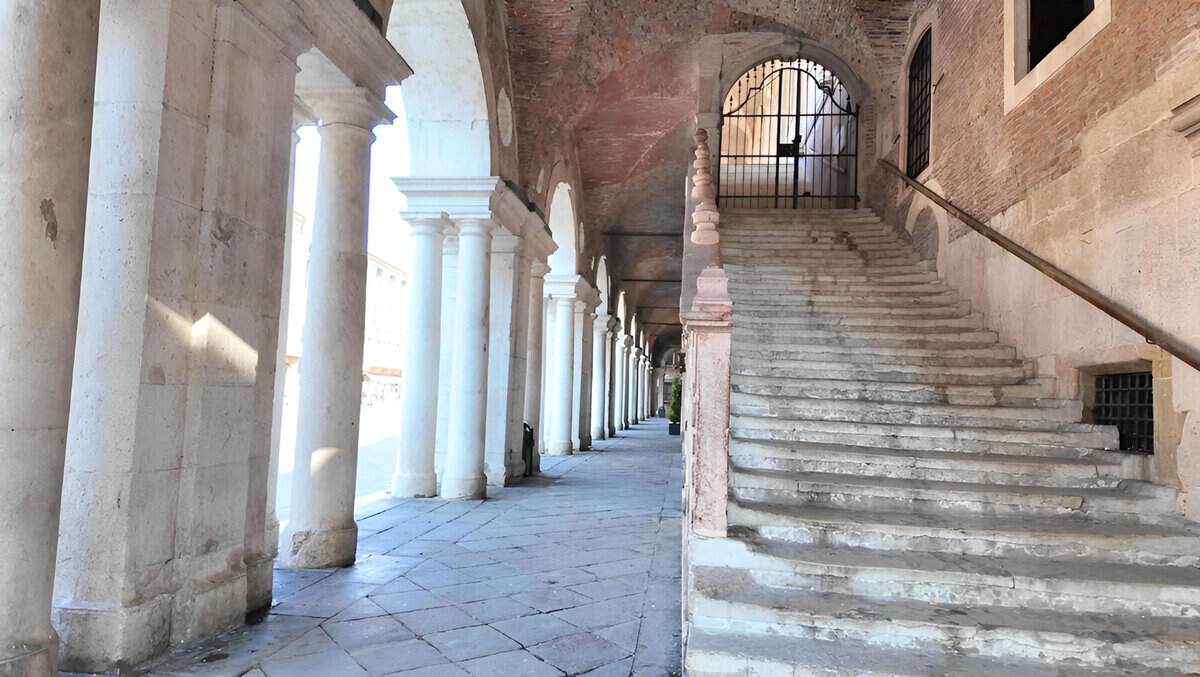
Basilica Palladiana
The city’s main landmark is the Basilica Palladiana on Piazza dei Signori. Although the name suggests a church, it is in reality a former town hall and commercial centre. Palladio rebuilt the building in 1546, and its characteristic white loggias became a symbol of Vicenza.
From the rooftop terrace, there is a beautiful view of the historic centre and the surrounding hills. The Basilica Palladiana is among the city’s most striking symbols and represents one of the best-known realisations of Palladio’s work.
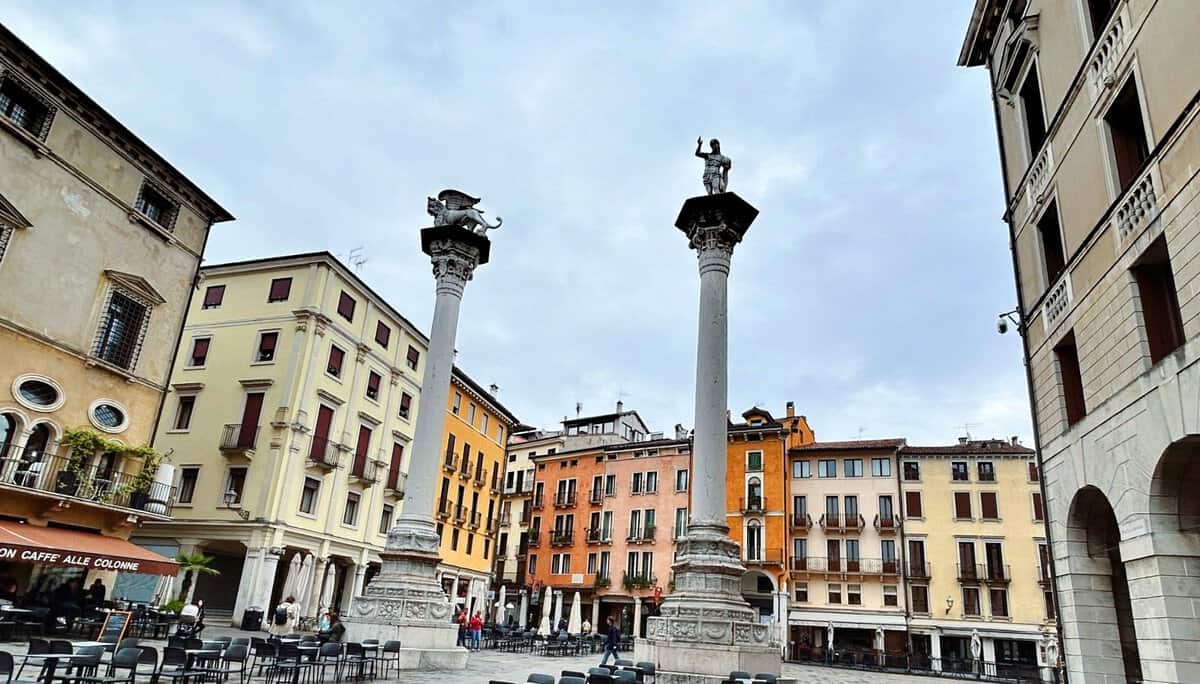
Piazza dei Signori
Piazza dei Signori was created on the site of the former Roman forum and to this day represents the city’s social centre. The square is surrounded by historic palaces, cafés, and public buildings. Here you will find buildings such as the Basilica Palladiana and the Torre Bissara, as well as columns bearing the statues of St. Mark and Christ the Redeemer.
Torre Bissara
Next to the Basilica Palladiana stands the clock tower Torre Bissara. At almost 82 meters tall, it is among the tallest historic towers in the region. Its history dates back to the Middle Ages, and for centuries it served as a symbol of municipal power.
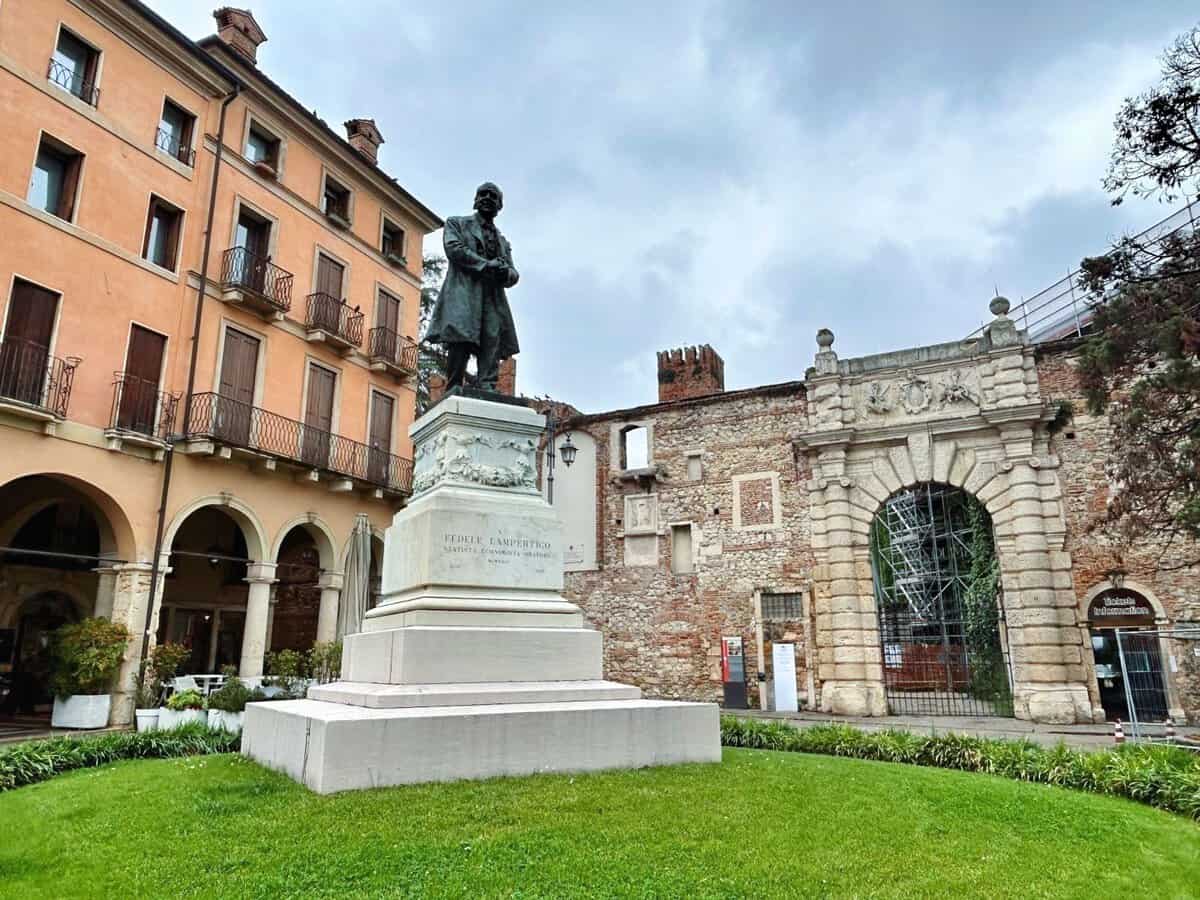
Teatro Olimpico
Teatro Olimpico is considered the oldest surviving covered Renaissance theatre in Europe. Andrea Palladio designed the building following the model of ancient Roman theatres, but he did not live to see its completion. After his death, the building was completed by his son Silla Palladio and the architect Vincenzo Scamozzi.
The greatest attention is drawn by the permanent scenography created by Scamozzi. Using perspective, it creates the illusion of the streets of an ancient city and to this day ranks among the most valuable examples of Renaissance theatrical art. The theatre was ceremonially opened in 1585 with a performance of Sophocles’ tragedy Oedipus the King.
Palazzo Chiericati
Just a few steps from Teatro Olimpico stands Palazzo Chiericati. Palladio designed the palace in 1548, and construction began about two years later. It was completed only in the 17th century.
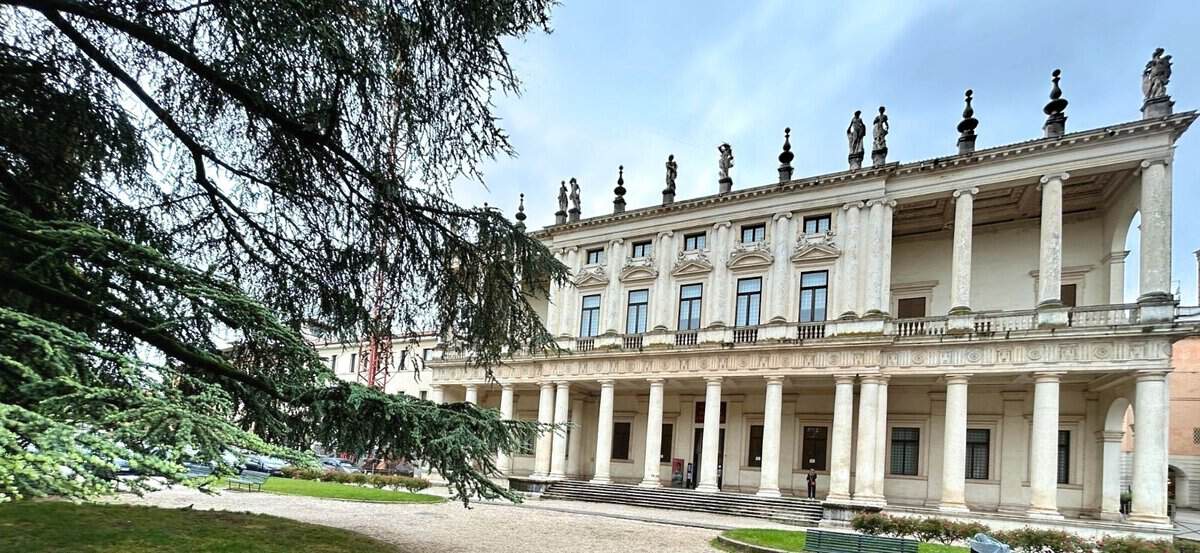
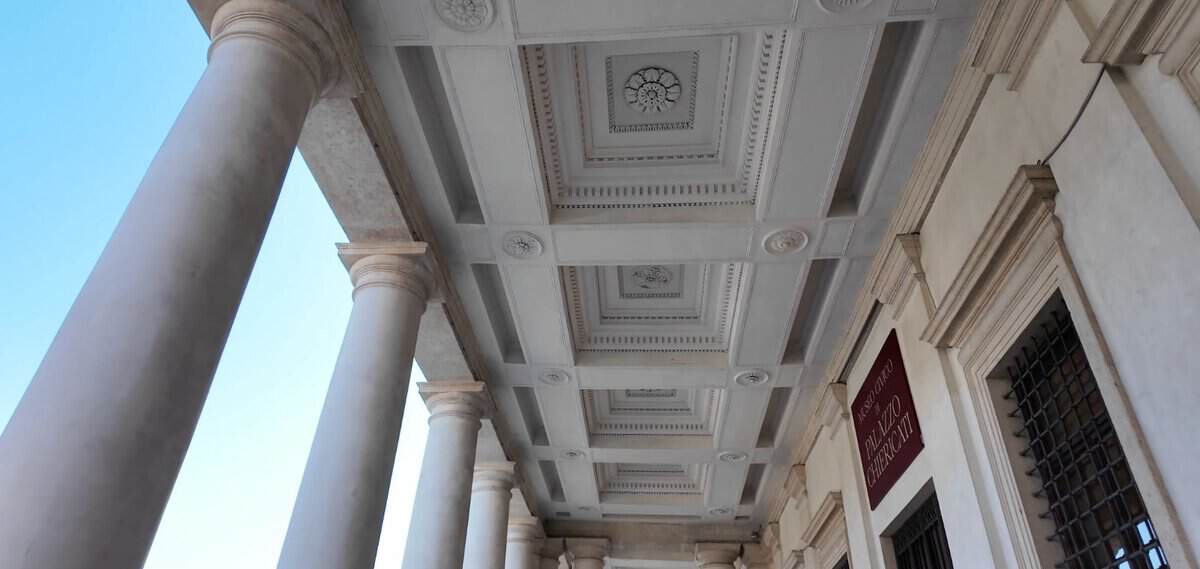
Today it houses the city gallery with extensive collections of paintings, sculptures, and historical objects. Visitors can admire, for example, works by Giovanni Bellini or Paolo Veronese.
Corso Andrea Palladio
The city’s main avenue connects the most important parts of the historic centre. Along the entire street, there are many Renaissance palaces, shops, restaurants, and cafés. A walk along Corso Andrea Palladio is one of the best ways to experience the city’s atmosphere.
Palazzo Thiene
Palazzo Thiene is one of the most important Renaissance palaces in Vicenza and is among the buildings listed by UNESCO. Its construction began in 1542 for the powerful Thiene family, based on a design by Giulio Romano, in which Andrea Palladio later also participated. The palace was intended to be part of a much larger project, which was never completed.
Today the building serves as the seat of provincial institutions.
Loggia del Capitaniato
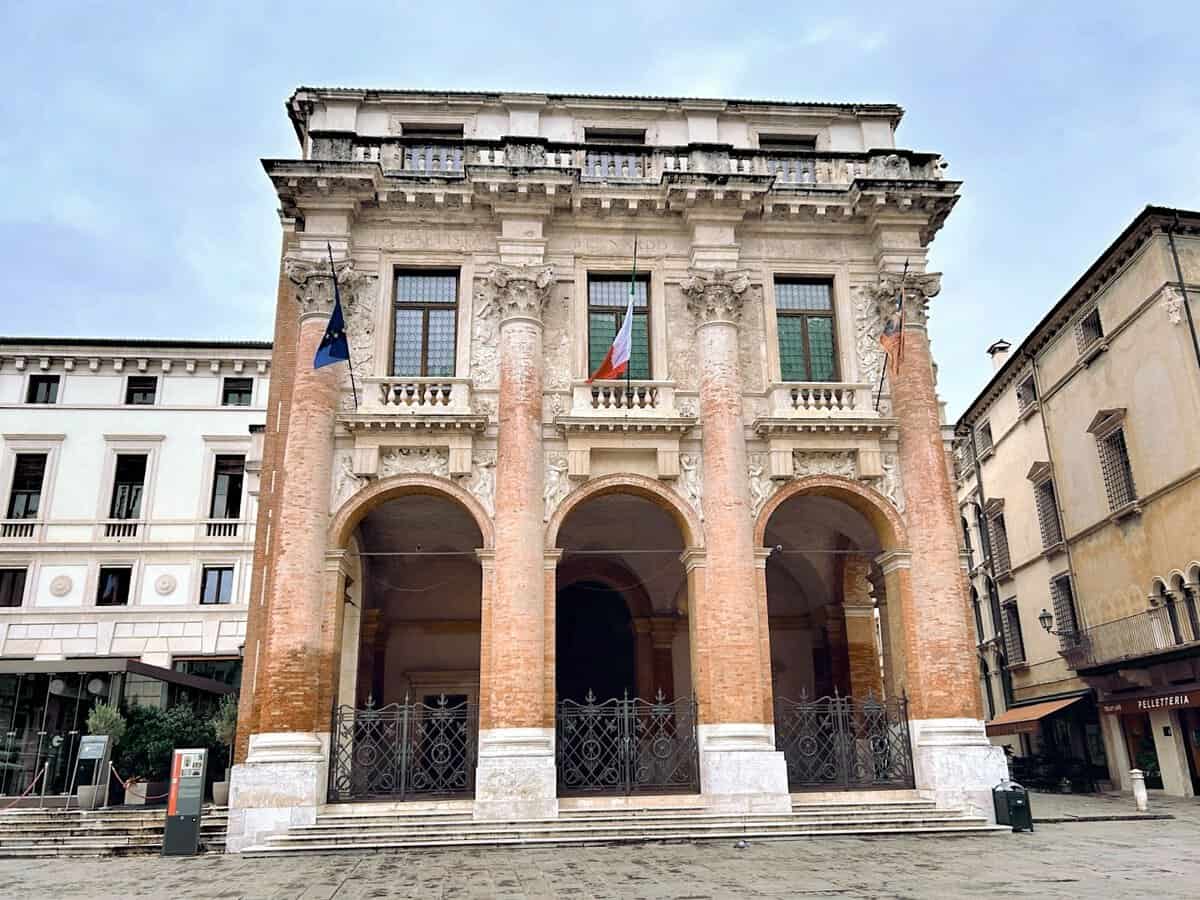
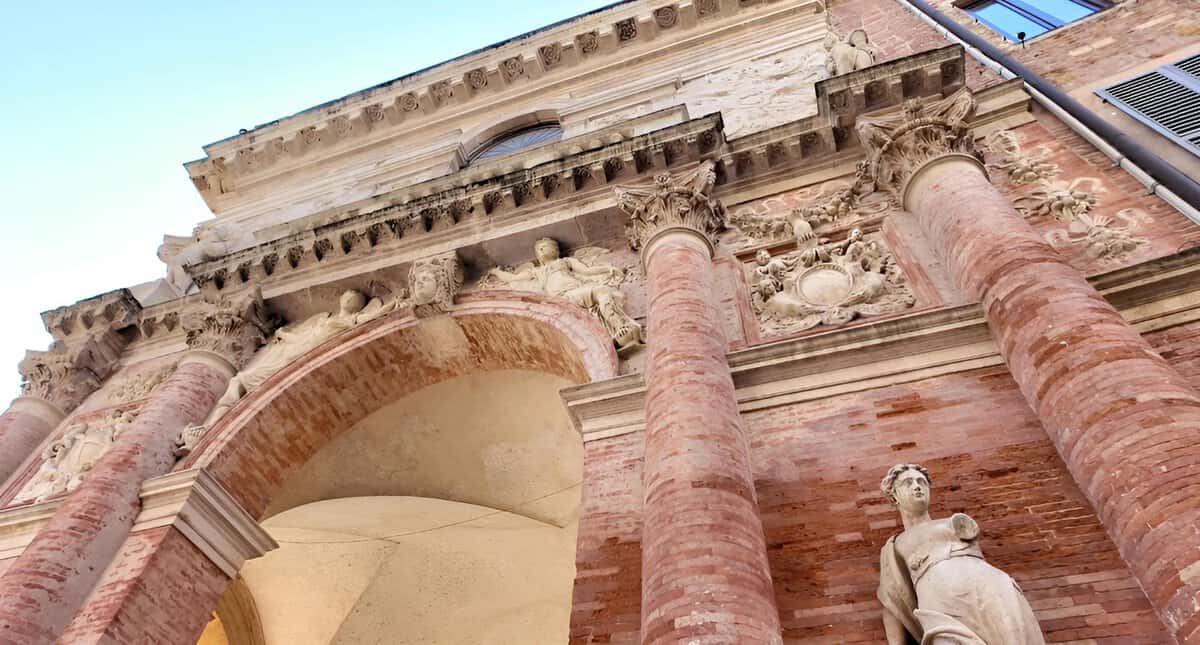
Loggia del Capitaniato is among Andrea Palladio’s last works and was built in 1571–1572 as the seat of the Venetian captain, the highest representative of the Venetian Republic in Vicenza. It is located on Piazza dei Signori directly opposite the Basilica Palladiana. The building is also interesting because it remained unfinished. Of the original project, only three arcades were built, although most historians believe Palladio intended to expand the building significantly. To this day, there are discussions about whether it was to have a total of five or even seven arcades. Even in this form, however, it is among the most important Renaissance buildings in Vicenza and represents the pinnacle of Palladio’s late work.
Chiesa di San Vincenzo
The church Chiesa di San Vincenzo stands on Piazza dei Signori, directly opposite the Basilica Palladiana. The original sanctuary was built at the end of the 14th century. Over the centuries, it was expanded and rebuilt several times. The characteristic Baroque façade from 1614–1617 is incorporated directly into Palazzo del Monte di Pietà and is decorated with two loggias with three arches, a Pietà relief, and five statues of saints led by Saint Vincent of Zaragoza, the church’s patron.
Cattedrale Santa Maria Annunciata
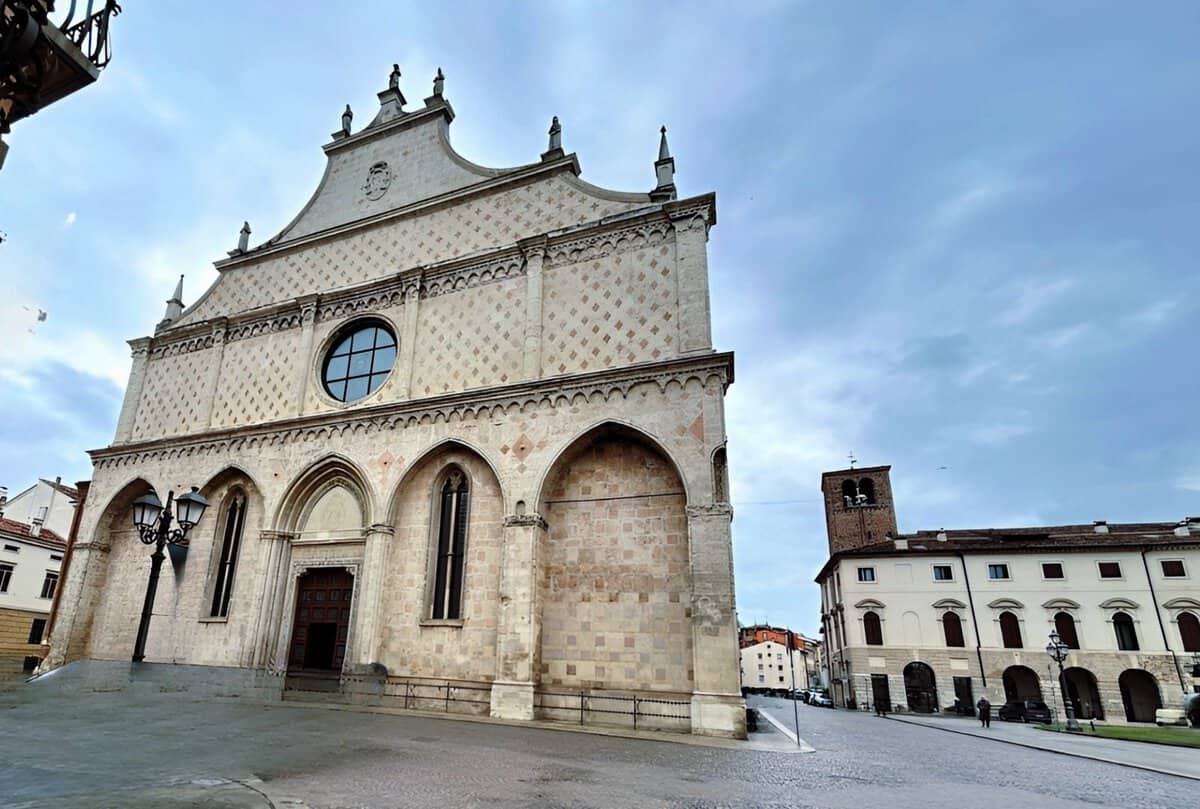
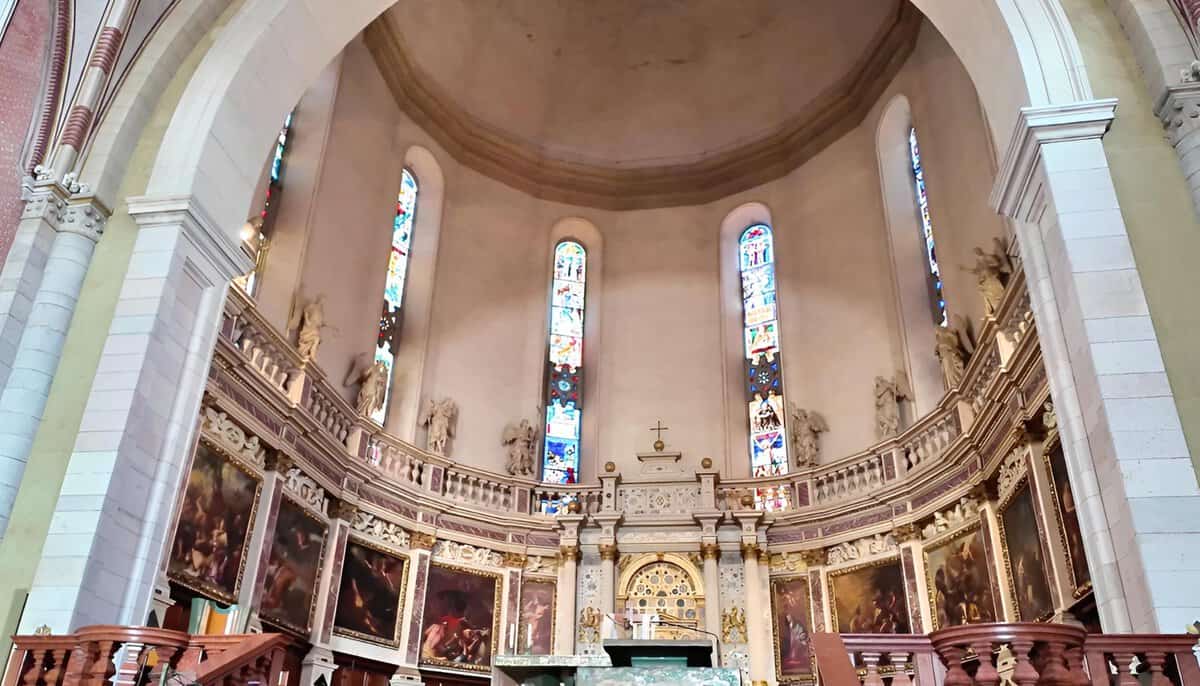
Cattedrale di Santa Maria Annunciata, also known as the Duomo di Vicenza, is the city’s main church and the seat of the Bishop of Vicenza. Its history dates back to the early Middle Ages, but its present form developed gradually between the 13th and 16th centuries. Andrea Palladio also contributed to the building, designing its characteristic dome. The cathedral was severely damaged by bombing during World War II and was subsequently restored. It houses a number of works of art as well as archaeological remains from earlier churches.
Chiesa di Santa Corona
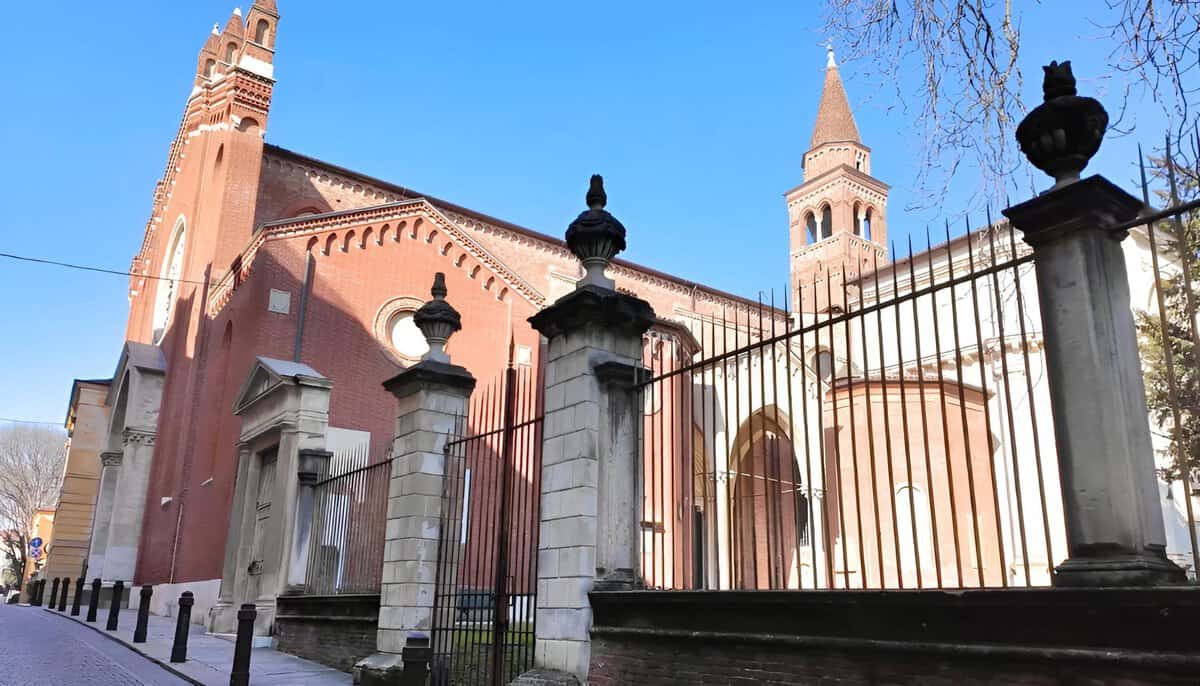
The church Chiesa di Santa Corona was founded in the 13th century by the Dominicans to house a precious relic, a thorn from Christ’s crown, from which its name is derived. The church is known not only for its Gothic architecture, but also for significant works of art. It contains the painting The Baptism of Christ by Giovanni Bellini and the Valmarana family funerary chapel, designed by Andrea Palladio.
Monte Berico
Santuario della Madonna di Monte Berico rises on a hill above Vicenza’s historic centre and is among the most important pilgrimage sites in the Veneto region. According to tradition, the Virgin Mary appeared here in 1426 and 1428 to protect the city from a plague. The sanctuary’s present form developed from the 15th to the 18th century and combines Gothic and Baroque elements. The reward for the climb is not only an important historic monument, but also one of the most beautiful panoramic views of Vicenza and the surrounding landscape.
From the terrace in front of the basilica, one of the most beautiful views opens up over the city, the surrounding countryside, and the distant Alps.
Palladio’s villas and UNESCO
Vicenza is inseparable from the name of Andrea Palladio. It was here that most of his most famous urban buildings were created, and from here his architectural ideas spread throughout the world. UNESCO therefore listed not only the city itself but also, later, 24 Palladian villas scattered across the Veneto region. Together they form a unique ensemble of Renaissance architecture known as the “City of Vicenza and the Palladian Villas of the Veneto”.

How to get to Vicenza.
Vicenza lies in the western part of Veneto between Verona and Padua. The city is located on the main railway line connecting Venice, Padua, Vicenza, Verona, and Milan.
The train station is only a few minutes’ walk from the historic centre. Regular services run here from Venice, Mestre, Padua, Verona, and Milan. For most visitors, the train is the most convenient means of transport.
You can also reach Vicenza by car via the A4 Turin–Trieste motorway. There are several public parking lots and parking garages around the centre. Drivers should, however, expect restricted traffic in the historic centre and the ZTL zone system.
Among the most commonly used parking areas are Fogazzaro, Canove, Teatro, Cattaneo, or Garage Castello. From there, most of the main sights can be comfortably visited on foot.
Time required
Vicenza’s historic centre can be explored on foot during a half-day visit. However, if you plan to visit the interiors of the monuments, Teatro Olimpico, the city museums, climb Monte Berico, or visit Villa La Rotonda, it is worth setting aside at least one day for the city.
Vicenza is a breathtaking historic city. Its charm lies in its architecture, details, and the atmosphere of its streets. That is precisely why, for many travellers, it is one of the biggest surprises in Venice. It is a city that will warm your heart, enrich your knowledge, and leave you with pleasant feelings from a beautiful trip.