
Driving to Veneto on Holiday
By car to Veneto: Travelling by car is among the most popular ways to reach the Italian region of Veneto. It offers maximum flexibility, comfort, and the opportunity to discover not only well-known seaside resorts, but also historic towns, wine-growing areas, or the mountain scenery of the Dolomites at your own pace.
Whether you are heading to Venice, Cavallino-Treporti, Jesolo, Eraclea Mare, Duna Verde, Porto Santa Margherita, or Caorle, having your own car lets you plan your holiday exactly as you wish. Unlike public transport, you are not tied to timetables, and you can stop at interesting places along the way or take trips to lesser-known corners of Veneto.
Although travelling by car is very convenient, it pays to know a few specific features of Italian roads. In this guide, you will learn how the toll system works, how to refuel correctly at a self-service station, what to watch out for in historic city centres, and how to avoid the most common traffic complications during the main tourist season.
Driving to Veneto on Holiday
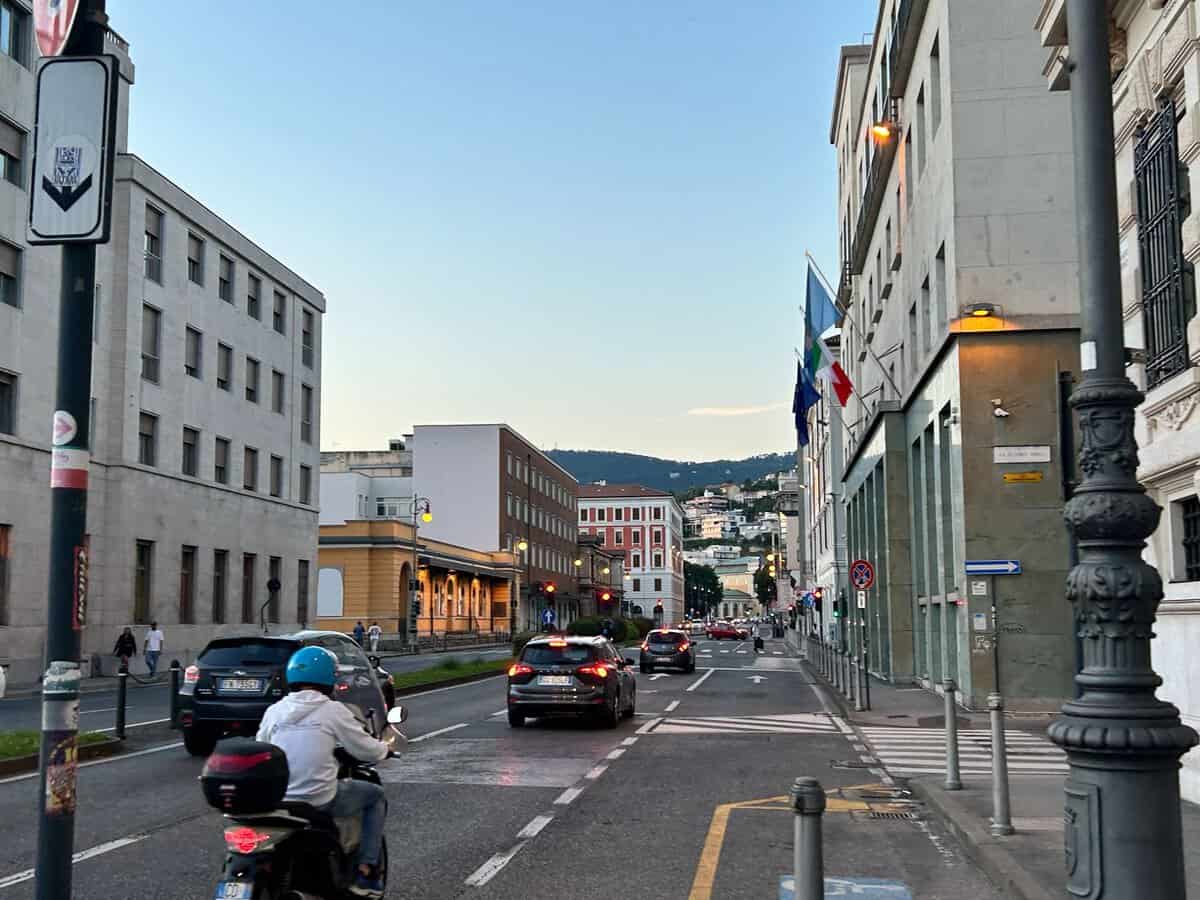
The road network in Veneto connects the coast, historic towns, and mountain areas. The main tourist destinations are accessible via motorways, high-quality state roads, and narrow local roads. Clear road signage makes navigation easier.
In summer, expect very heavy traffic. The biggest traffic complications occur on weekends during changeover days, when traffic jams can form not only on the A4 motorway, but also on the access roads to seaside resorts.
Many drivers are surprised that they often do not experience the longest delays on the motorway, but only after leaving it. On Saturday mornings, queues regularly form on the access roads to Cavallino-Treporti, Jesolo, Eraclea Mare, or Caorle. The last kilometres of the journey can thus be extended by dozens of minutes, and in heavy traffic or in the event of accidents, waiting for several hours is not uncommon.
If you can adjust your arrival time, it is best to avoid Saturday mornings. Traffic is significantly calmer when arriving outside the weekend.


Motorway network
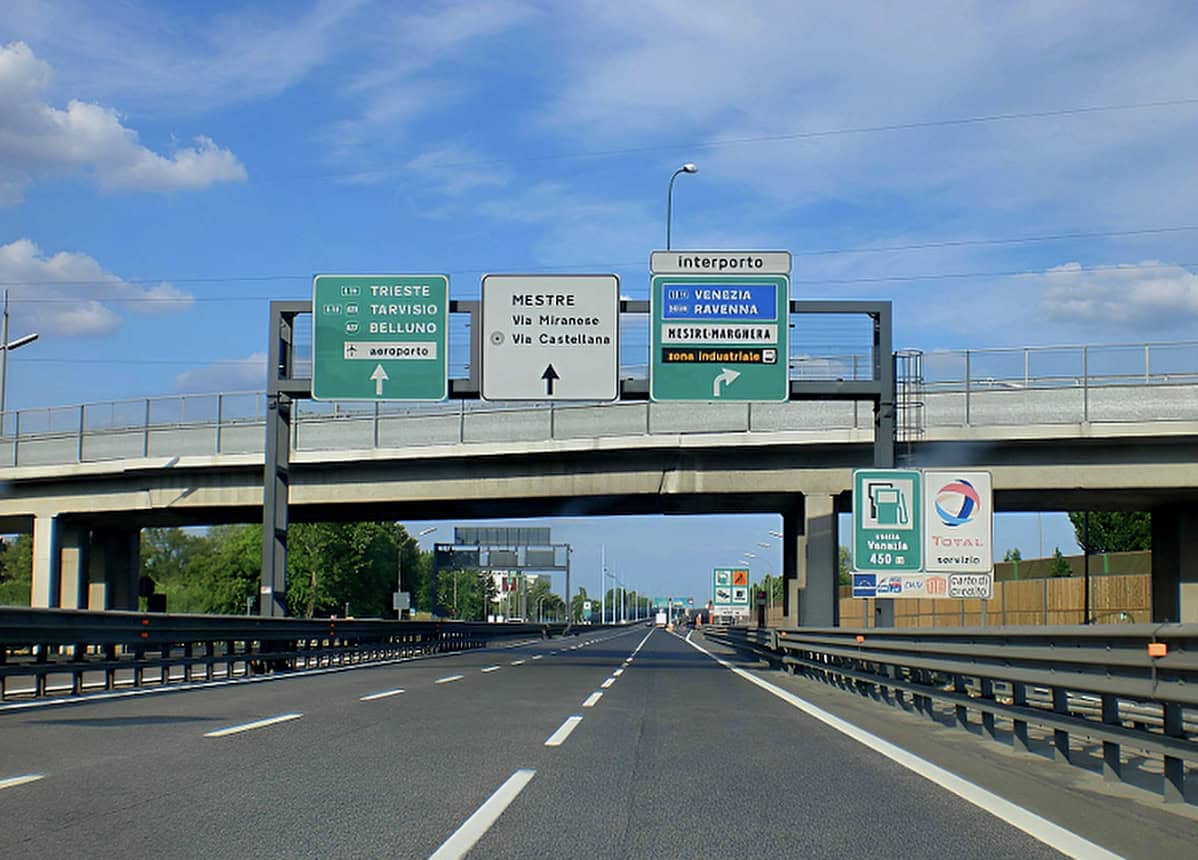
The main transport artery of the region is the A4 Turin – Trieste motorway, which connects the west and east of northern Italy. Most visitors heading to Venice and the seaside resorts of the northern Adriatic arrive via this route.
Other important routes connect to it:
- A27 Venice – Belluno – the main connection to the Dolomites and to the province of Belluno.
- A13 Bologna – Padua – connects Veneto with the Emilia-Romagna region and central Italy.
Around Mestre, all the main directions converge into one of the busiest transport hubs in northern Italy, where traffic is densest during the summer months.
Tolls on Italian motorways
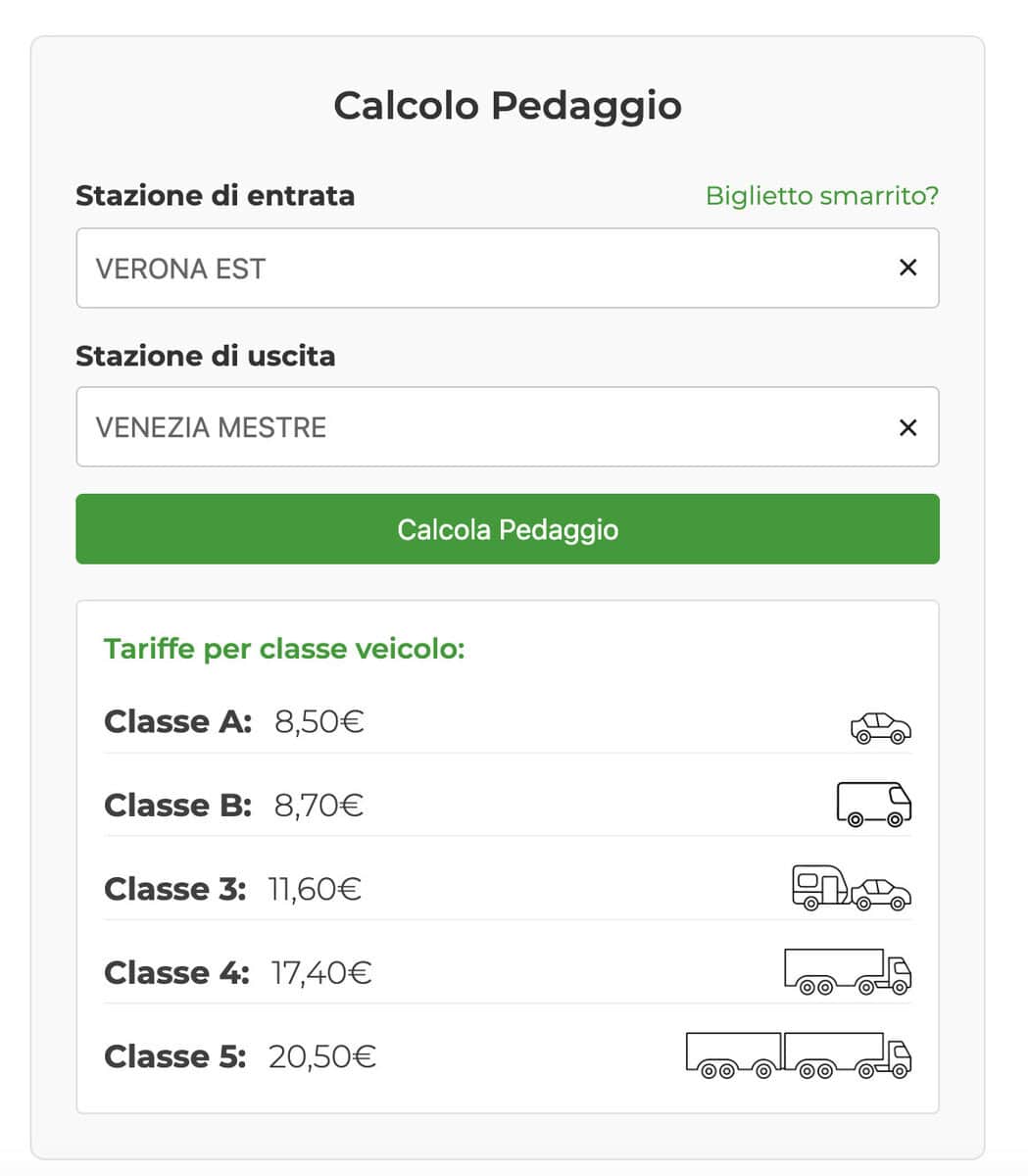
Italy does not use a motorway vignette system. When entering the motorway, you take a ticket, which you keep until you exit. At the toll booth, you pay an amount based on the distance travelled. To calculate the toll in advance, use the official calculator: Autostrade Alto Adriatico – Calcolo Pedaggio. In the first field, enter your planned entry point; in the second, your exit. The calculator will then display the toll for different vehicle types.

How to pay the toll correctly
When approaching the toll booth, follow the road signs and get into the correct lane:
- Carte – payment by card.
- Contanti – cash payment.
- Telepass – only for vehicles equipped with the Telepass electronic unit.
If you pay by card, insert the ticket into the machine and then tap or insert your payment card. After payment, the barrier will open automatically.
What is Telepass?
Telepass is an electronic system for automatic toll payment. Vehicles equipped with a small onboard unit pass through dedicated lanes without stopping, and the fee is automatically deducted from the owner’s account. The system is used mainly by Italian drivers and companies. For ordinary tourists, Telepass is not necessary.
If you accidentally enter a Telepass lane, stay calm. Do not force your way through the barrier; instead, use the button to call an attendant, who will tell you what to do next.
What to do if you lose the entry ticket from the motorway toll booth?
Losing the ticket at the entry toll booth is nothing unusual and is even expected. It can happen that, when paying or putting it away, the ticket slips from your hand and, with the window open, the wind carries it away. Likewise, you may accidentally tuck it among your documents or simply lose it during the trip. If this happens, there is no reason to panic.
When exiting the motorway, press the assistance button at the booth. Without the entry ticket, the system cannot determine where you entered the motorway.
In such a case, the highest possible toll for the given motorway section is usually charged, because the operator cannot verify the actual length of your journey. Afterwards, however, you can carry out a self-certification of the entry point, in which you state where you actually entered the motorway. After the information is verified, the toll may be recalculated, and any overpayment will be refunded. The best prevention is to put the entry ticket in a safe place immediately after entering the motorway and not handle it until you reach the booth at the motorway exit.
How to carry out self-certification when you lose the ticket
If, when exiting the motorway, you paid the highest possible toll due to a lost entry ticket, you can then request a recalculation of the fee via the so-called Self-certification of the entry toll booth.
The procedure is as follows:
- Open the page “Autostrade per l’Italia – Entry toll booth self-certification” (Autocertificazione del casello di entrata).
- Fill in the vehicle license plate, date, and approximate time of passage.
- State the toll booth where you actually entered the motorway and the exit where you left the motorway.
- If you have evidence of your route (for example, a fuel station receipt, card payment confirmation, a navigation record, or location history on your mobile phone), attach it to the request. It can help verify the actual route.
- Submit the form for processing.
Refuelling
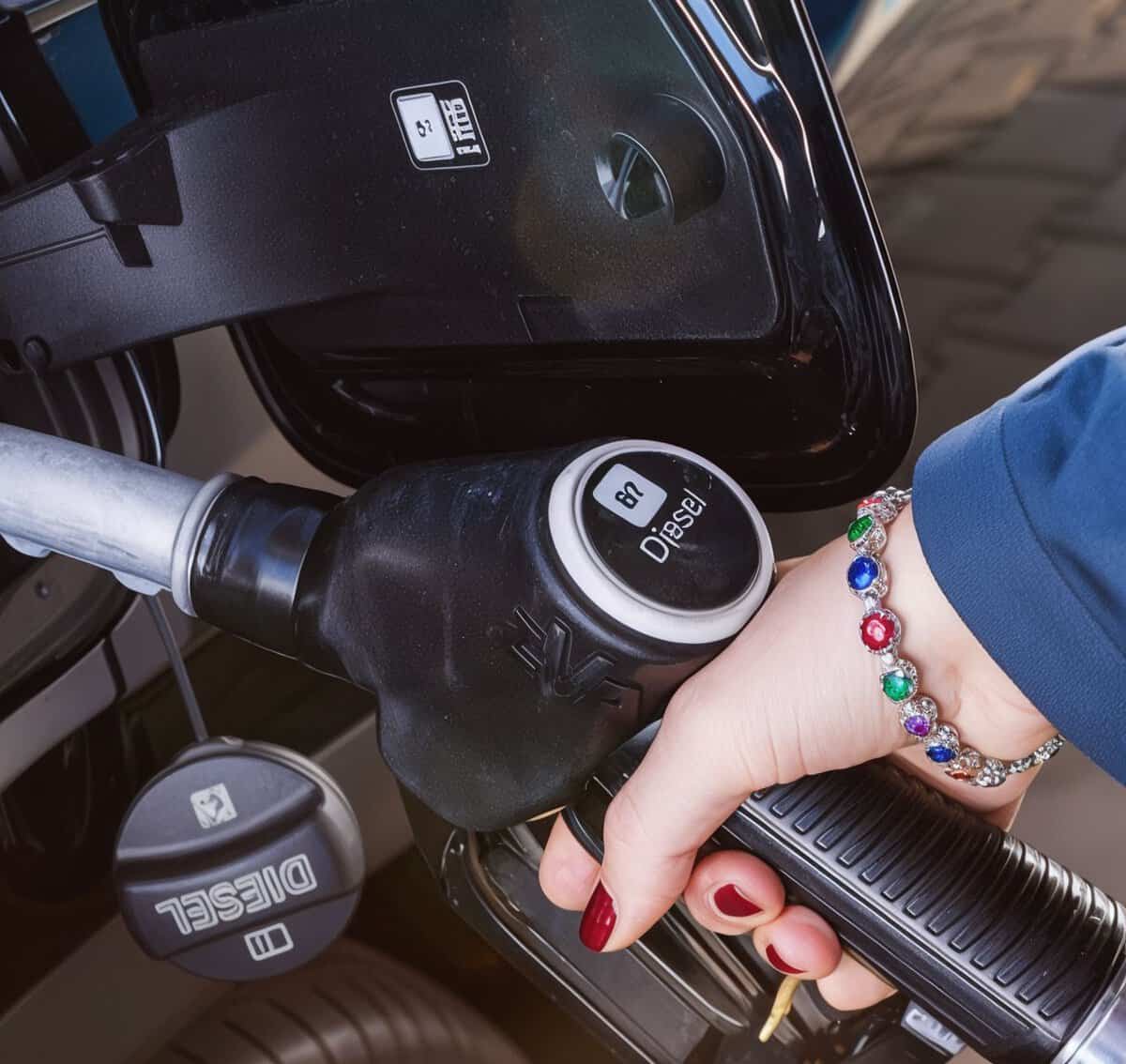
There are plenty of fuel stations throughout Veneto, both on motorways and on local roads. In most cases, fuel prices at motorway service areas are higher than at stations located in towns or villages. Before refuelling, it is worth comparing prices, as the difference between two nearby fuel stations can be more than €0.10–0.20 per litre.
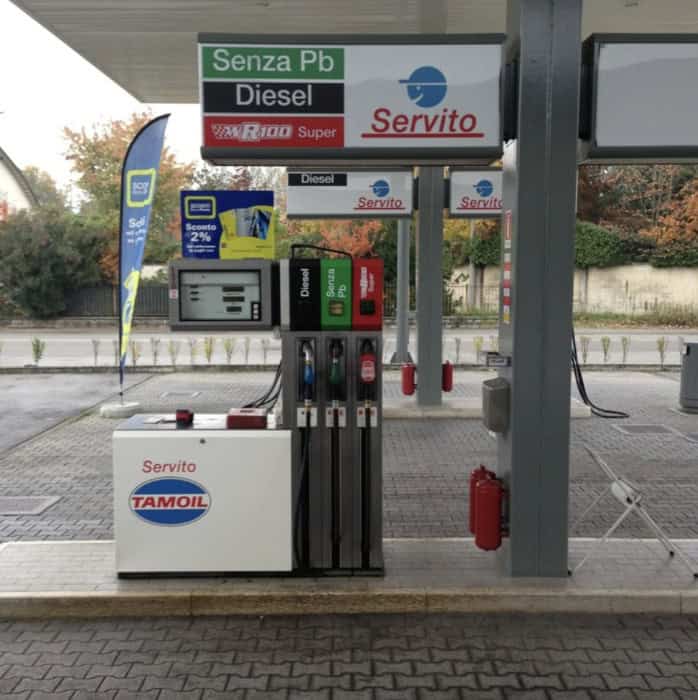
At most fuel stations, you can choose between Self Service (Fai da te) and Servito. With Servito, a station attendant refuels your vehicle, but you pay a higher price for this service.
How Self Service Works
Refuelling at a self-service pump is usually very straightforward:
- Park at a pump marked Self Service.
- If required, pay in advance by card or cash at the payment terminal.
- Select the pump number and the type of fuel.
- Refuel your vehicle.
- If you paid more than the final amount, the unused balance will be automatically refunded according to your payment method.
At automatic self-service pumps, the system often pre-authorises a higher amount (for example €100) before refuelling. Once refuelling is complete, only the actual cost of the fuel purchased is charged and the remaining authorisation is automatically released.
Self Service vs Servito
If you choose Servito, the fuel station attendant will refuel your vehicle for you. This service is more convenient but also more expensive than using the self-service pump.
Over the last decade, the price difference between Self Service (Fai da te) and Servito has increased significantly, especially at major branded fuel stations. In June 2026, attended refuelling was approximately €0.15–0.18 per litre more expensive than self-service, while the difference at independent fuel stations was usually smaller. For drivers travelling longer distances, choosing Self Service can result in noticeable savings.
Current Fuel Prices in Italy
You can check current fuel prices using the official Osservaprezzi Carburanti interactive map provided by the Italian Ministry of Enterprises and Made in Italy (MIMIT). The map displays petrol, diesel, LPG and CNG prices at fuel stations across Italy, allows you to search by city, address or your current location, distinguishes between Self Service and Servito prices, and is based on data that fuel station operators are legally required to report regularly.
How to Use the Official Fuel Price Map
- Open the Osservaprezzi Carburanti map.
- Enter a city, address or use your current location.
- Select the required fuel type (petrol, diesel, LPG or CNG).
- Choose Self Service or Servito.
- To sort the results from the cheapest to the most expensive fuel station, select Crescente.
- Click on a fuel station to view the current fuel price, the date of the latest update and additional information about the available fuels.
📄 Download: Italian Fuel Station Glossary (PDF)
Fuel Station Opening Hours
Fuel stations at motorway service areas are usually open 24 hours a day, and many also offer restaurants, toilets and convenience stores.
At fuel stations outside the motorways, attendants are typically available from 7:30 AM to 12:30 PM and 3:30 PM to 7:30 PM. On Sundays, many attended fuel stations remain closed, while self-service pumps continue to operate. However, this is not always the case. Especially in smaller towns or rural areas, self-service pumps may also be unavailable overnight, so if you are travelling in the evening or at night, it is advisable to refuel in advance.
Traffic regulations
The maximum permitted speed limit in built-up areas is 50 km/h, outside built-up areas 90 km/h, on expressways 110 km/h, on motorways 130 km/h. In rain, the maximum permitted speeds may be reduced on some roads.
Seat belts are mandatory for all passengers, and children must be transported in appropriate child car seats.
The official Italian Codice della Strada (road traffic code) is available on the Italian Ministry of Transport’s website and on the ACI portal.

ZTL zones
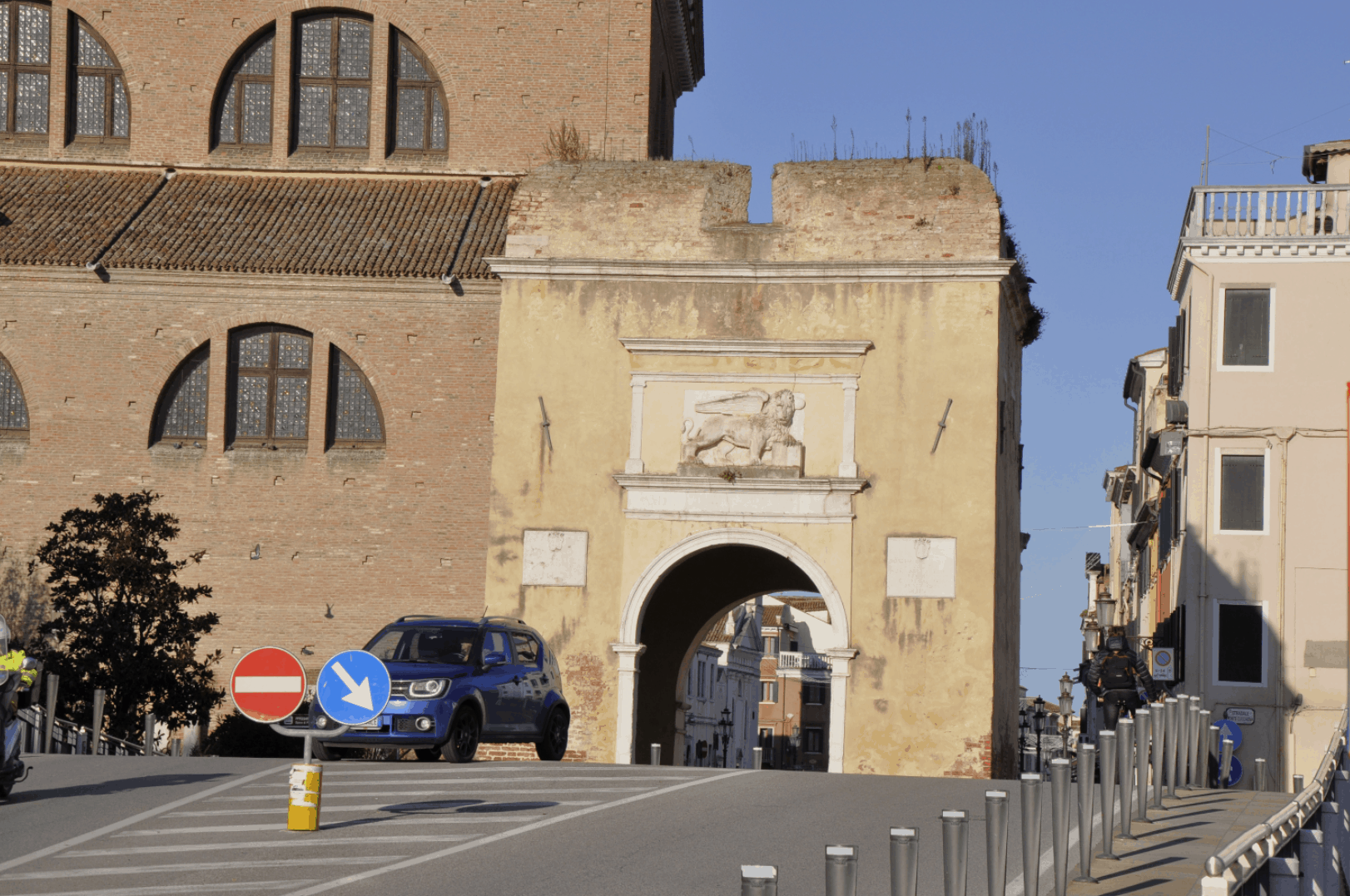
When visiting historic city centres, pay attention to ZTL (Zona a Traffico Limitato) zones. Only vehicles with the appropriate permit may enter these areas, and their entrances are monitored by a camera system. Unauthorised entry is usually fined, and the fine is also delivered to foreign drivers.
You cannot enter historic Venice by car at all. The closest option is to park on the island of Tronchetto or at Piazzale Roma, then continue on foot or by water transport. There is also a large parking lot in Punta Sabbioni, from which boats (vaporetto) depart for Venice and other islands in the Venetian lagoon (Lido di Venezia, Murano, Burano…).
Fines
Fines for traffic offences, improper parking, or unauthorised entry into a ZTL (Zona a Traffico Limitato) may be delivered even several months after you have returned home. Do not ignore them. Paying promptly is usually cheaper than later enforcement.
If you are not sure what the fine was issued for, check the date, time, and place of the offence and, if necessary, have the document translated. For rental vehicles, the rental company may also charge an administrative fee for processing the fine.
Safety
Italy is generally a safe country, yet it is worth following a few basic rules:
- Do not leave luggage, laptops, cameras, or other valuables in visible places in the car.
- If you are carrying larger luggage, put it in the trunk before arriving at the parking lot.
- At service areas along motorways and at busy tourist parking lots, lock the vehicle and do not leave it unnecessarily open even for a short time.
- Watch out for pickpockets in larger cities, at train stations, on public transport, and in tourist-heavy places.
- For longer stops, choose well-lit and busy parking lots.
- Never leave children or animals locked in the car, even for a short time.
In warmer months, the temperature in a parked vehicle can rise sharply within a few minutes. - Also, never leave documents, payment cards, and your mobile phone in the car.
- In autumn and winter months, especially around Venice, Padua, and in the Po River plain, dense morning fogs can form, significantly reducing visibility. Under certain conditions, they can persist for almost the entire day.
Parking
In most towns and seaside resorts, you will encounter colour-coded parking markings.
- White lines indicate free parking.
- Blue lines mean paid parking.
- Yellow lines are reserved for residents or vehicles with special authorisation.
Paid parking can usually be paid directly at the parking meter, by card, or via a mobile app. Most commonly, you may encounter EasyPark, MooneyGo, Telepass, or local municipal apps. Always follow the information shown on the parking meter or road signage, which indicates the supported payment method.
Not all machines accept payment cards, and in smaller towns it may still be necessary to pay with coins. It is therefore worth having at least some small cash with you or installing one of the supported parking apps before your trip.
During the peak tourist season, parking lots near beaches fill up very quickly. If you are travelling in July or August, we recommend arriving in the morning hours or using more distant parking lots and walking the last part of the way or using local bus transport.
Tip: In some resorts, for example in Jesolo, Caorle, or Cavallino-Treporti, parking fees in the high season are charged from morning until late evening. Before leaving your car, always check the validity of the parking ticket and the maximum permitted parking time.
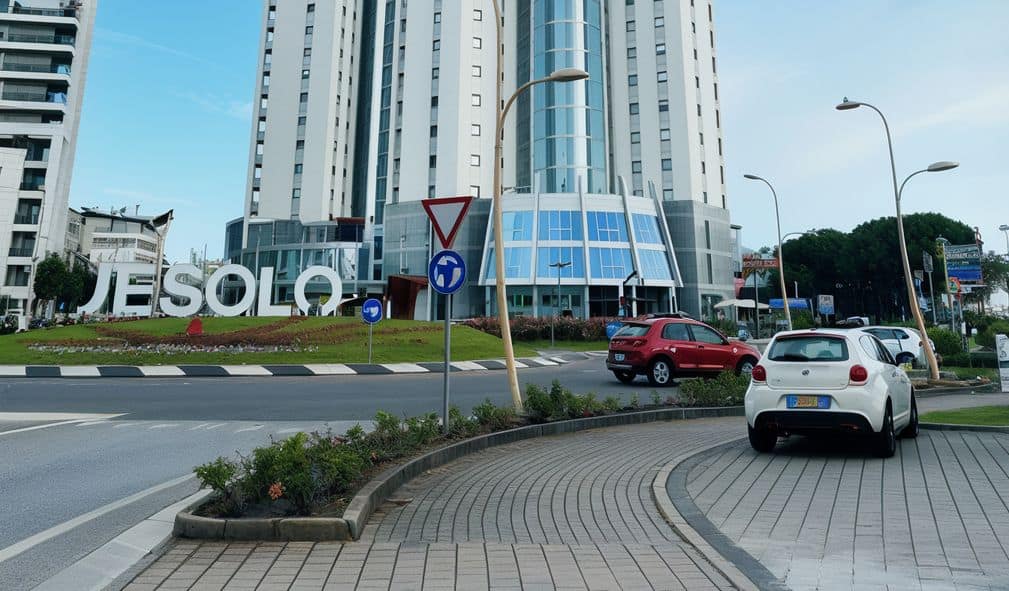
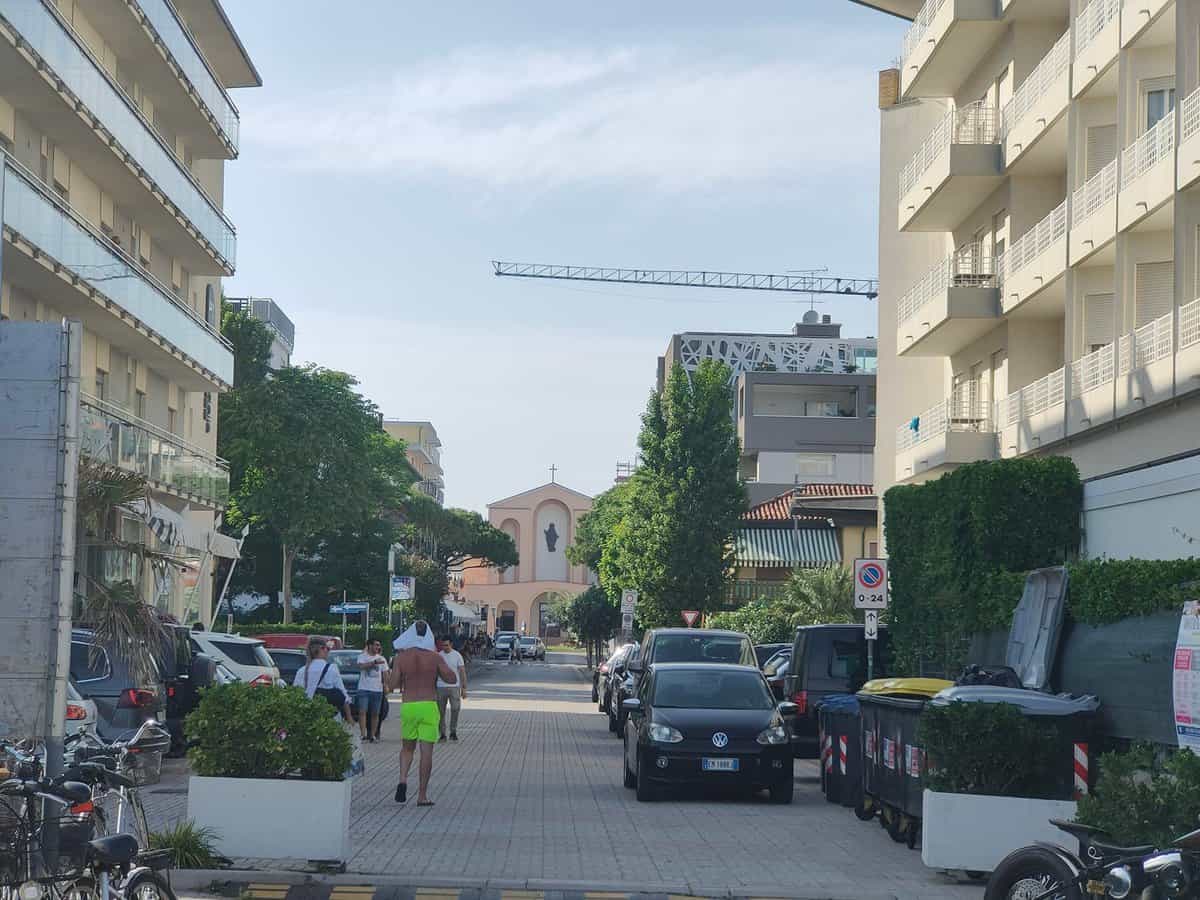
Watch out for evening promenades. In many seaside resorts, for example in Jesolo, the main street turns into a pedestrian zone (a so-called promenade) in the late afternoon and evening. During designated hours, entry and parking of motor vehicles are prohibited. Closure times may vary by town and season; therefore, always follow road signage.
Insurance
Before travelling, it is worth checking not only the validity of your vehicle insurance, but also the scope of assistance services. In addition to mandatory liability insurance, we recommend verifying whether your insurance includes towing, possibly repatriation of the vehicle to your home country, a replacement vehicle, accommodation for the crew during a longer repair, or coverage of costs to continue the journey. The scope of assistance varies significantly between insurers, and especially when travelling abroad, it can determine whether an unpleasant breakdown becomes only a short delay or a major complication for the entire holiday.
Breakdown or traffic accident
If a breakdown or traffic accident occurs during the trip, stay calm, switch on hazard lights, and put on a reflective vest before getting out of the vehicle. If possible, move the vehicle to a safe place and mark it with a warning triangle. Then contact your assistance service, which will recommend the next steps.
In the event of an accident with injuries or more serious traffic complications, call the European emergency number 112. We also recommend calling the police in the event of a dispute about how the accident happened, in case of major damage, damage to someone else’s property, or if you are driving a rental vehicle. Many rental companies require a police report as part of the process of handling an insurance claim.
The European accident statement can significantly facilitate handling an insurance claim. If the other party fills out the document only in Italian or another language, never sign a form you do not fully understand. By signing, you confirm the correctness of the information provided, which may later affect the assessment of responsibility for the accident. In case of uncertainty, request a translation, contact your assistance service, or call the police, who can document the course of the accident and draw up an official report.
Rental car
If you plan to rent a car only after arriving in Italy, spend a few minutes thoroughly checking the vehicle before taking it over. Check for any damage to the bodywork, wheels, windshield, and interior, and make sure everything is recorded in the handover report. To be safe, we recommend taking photos of the vehicle or recording a short video before departure.
Before taking over the vehicle, also familiarise yourself with the rental company’s conditions in the event of a breakdown or traffic accident. Most companies require that any accident be reported immediately, and some also require a police report. Before your trip, save the rental company’s assistance service phone number and verify the procedure to follow in the event of an accident or technical fault.
If you book the vehicle through a booking portal or mobile app, pay increased attention to the insurance terms. Insurance arranged through an intermediary may not work the same way as insurance offered directly by the rental company. With some external insurance policies, in the event of damage, it may first be necessary to pay the incurred costs to the rental company out of your own funds and only then request reimbursement from the insurer. By contrast, insurance arranged directly with the rental company usually settles the damage directly with the rental company and often reduces or completely eliminates the deductible.
Insurance offered directly by rental companies is usually significantly more expensive than insurance arranged through booking portals or external insurers. However, the lower price of external insurance may come at the cost of a different claims-handling process. Before taking out insurance, always carefully study the policy terms, the deductible amount, any exclusions, and the procedure for handling damage.
Before returning the vehicle, also verify the fuel conditions. Most commonly, you will encounter the rule that the car must be returned with the same amount of fuel as when it was picked up. It is therefore worth refuelling shortly before returning the vehicle and keeping the receipt in case of a check.

ATM withdrawals
There are plenty of ATMs in Italy, especially in towns and tourist resorts. Nevertheless, it is worth following a few basic rules:
- Prefer ATMs operated by banks. Independent ATMs located in tourist-heavy places may charge higher fees.
- If the ATM offers currency conversion (Dynamic Currency Conversion – DCC), it is usually more advantageous to choose withdrawal in the local currency (EUR) and leave the conversion to your bank or card issuer.
- Before travelling, verify your bank’s or card issuer’s conditions for withdrawals abroad and any fees.
- In most shops, restaurants, and at fuel stations, you can conveniently pay by card; nevertheless, a small amount of cash can be useful at markets, in smaller shops, or in some parking lots.
- Cash withdrawals using a mobile phone or smart watch (NFC) are not commonly supported at most ATMs in Italy. For withdrawals, we therefore recommend carrying a physical payment card.
Tip: The same rule applies when paying by card in shops and restaurants. If the payment terminal offers currency conversion, it is usually more advantageous to choose payment in euros (EUR).
What to watch out for when travelling by car to Veneto
- entering a ZTL zone following navigation,
- choosing the wrong lane at the toll booth (Telepass),
- refuelling at a Servito pump instead of Self Service,
- parking in yellow-marked spaces or after the parking ticket has expired,
- leaving valuables in a visible place in the vehicle,
- signing documents after an accident without understanding their content.
Have a safe trip!
Travelling by car to Veneto is often long and demanding for many visitors. Therefore, do not underestimate fatigue behind the wheel and take enough breaks to rest during the journey. Every year, traffic accidents occur caused by tired drivers, which can often be prevented precisely by regular rest.
If you have the time, consider splitting the trip into several days. On the way to Veneto, you can visit many beautiful towns, lakes, mountain areas, and historic landmarks, turning the journey itself into a pleasant part of your holiday. It is not necessary to reach your destination as quickly as possible; it is more important to arrive safely.
We wish you a safe trip, many wonderful experiences, and above all, a safe return home.