
Vacation with a Dog and Cat in Northern Italy: Documents, Transportation, Beaches, and Accommodation

Vacation with Dogs and Cats
The Veneto region in Northern Italy offers many options for vacations with dogs and cats. The sandy beaches of the Adriatic Sea, historic cities, Lake Garda, and the mountainous landscape of the Dolomites attract visitors from all over the world. Traveling with a pet, however, requires some preparation, from valid veterinary documents to choosing suitable transportation and booking accommodations that truly accept animals. It’s also important to consider whether the trip is suitable for your pet, taking into account its age, temperament, health, and the season in which you plan your vacation.
Thanks to common European rules, traveling with dogs and cats between EU member states is relatively simple. However, individual destinations, carriers, and accommodations may have their own conditions, which are good to know before departure.
Veneto is among the regions where services for visitors with animals are gradually developing. Along the coast from Chioggia through Lido di Venezia, Cavallino-Treporti, Jesolo, Eraclea Mare to Caorle, you can find specialized beaches, campsites, apartments, and hotels that accept pets.


What Documents Does a Dog or Cat Need When Traveling to Italy from Another EU Member State?
For regular non-commercial travel with dogs and cats between EU member states, common rules apply. The animal must meet basic veterinary requirements regardless of which member country its owner is coming from.
European Pet Passport
A dog or cat must have a European pet passport issued by an authorized veterinarian. The passport contains the animal’s identification details, information about its owner, microchip number, and rabies vaccination records. The document remains valid for the animal’s lifetime, provided the required health data and vaccinations are up to date.
Microchip Identification
The animal must be identified with a microchip that meets European requirements. An exception is a readable tattoo done before July 3, 2011. The microchip must be implanted before or on the same day as the rabies vaccination. The identification number must match the details in the European passport.
Rabies Vaccination
Valid rabies vaccination is a basic condition for traveling with dogs and cats within the European Union. At the first vaccination, the animal must be at least 12 weeks old. After completing the basic vaccination, you must wait at least 21 days before the animal can travel. If the booster is given while the previous vaccination is still valid, the new waiting period generally does not apply.
Important: Italy does not allow entry for young dogs and cats that do not yet have valid rabies vaccination. With standard basic vaccination, they can travel at the earliest around the 15th week of age. For standard non-commercial travel from another EU member state to Italy, additional veterinary certificates or rabies antibody tests are generally not required. Common rules usually apply to traveling with up to five animals. For a higher number, there are special conditions and exceptions.
Protection Against Heartworms and Other Parasites
When traveling with dogs and cats to the Veneto region, it is also important to consider protection against parasites transmitted by mosquitoes. Heartworm (Dirofilaria immitis) is present in Italy and can cause serious heart and lung disease. In advanced cases, the infection can be fatal, particularly if it is not detected and treated in time. Dogs are especially vulnerable, but cats can also become infected.
The European veterinary organization ESCCAP (European Scientific Counsel Companion Animal Parasites) recommends preventive measures against heartworm when traveling to areas of Italy where the parasite is present. The appropriate preventive treatment and its timing should be discussed with a veterinarian before departure. Additional preventive treatment may also be necessary after returning home.
Heartworm prevention is not a legal requirement for entering Italy, but it is an important health precaution, particularly when staying in areas with high mosquito activity.


Traveling to Veneto with Dogs and Cats
Air Travel
When traveling to Veneto, visitors from EU member states can also use air travel. The main airports in the region include Marco Polo Airport in Venice, Treviso Airport, and Verona Airport. The conditions for transporting animals vary depending on the airline and specific flight.
Small Dogs and Cats in the Cabin
Some airlines, such as Lufthansa, Air France/KLM, Air Dolomiti, Smartwings, or Vueling, allow the transport of small dogs and cats in the passenger cabin. The decisive factor is usually the total weight of the animal, including the carrier, and its permitted dimensions. During the flight, the carrier must remain in the designated place.
Transporting Larger Dogs
Larger dogs can travel in a designated area of the plane if the carrier allows it. Some companies restrict or do not offer animal transport at all. Special rules may apply to brachycephalic breeds due to the increased risk of breathing difficulties.
Booking Animal Transport
It is advisable to confirm the transport of a dog or cat before purchasing a ticket. The number of animals on board is usually limited, and transport is generally charged. Before the trip, it is also advisable to consult with a veterinarian about the animal’s health condition.
Traveling to Veneto by Car with a Dog and Cat
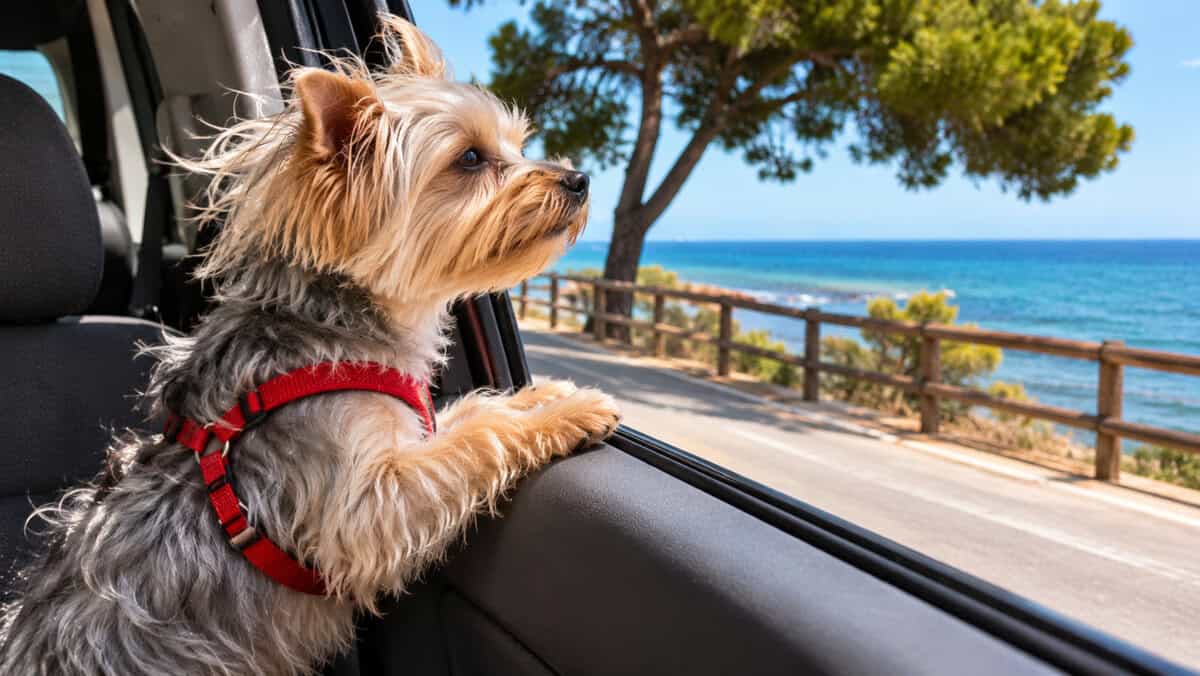
A car is one of the most comfortable ways to travel with pets. It allows you to adapt the route to their needs, plan regular stops, and transport your own equipment. The main road routes to the Veneto region from other EU member states lead through Austria, Slovenia, and other parts of Italy.
Important transport hubs include Venice, Mestre, Padua, Verona, and Udine in the neighboring region of Friuli Venezia Giulia. For visitors heading to the Adriatic Sea, the A4 and A27 highways and connecting roads leading to seaside resorts are particularly significant.
Safe Transport of Animals in a Car
Italian traffic regulations govern the transport of domestic animals in Article 169 of the Highway Code. The transport of one domestic animal is allowed if the animal does not restrict the driver and does not endanger driving safety. When transporting more animals, additional requirements apply to their placement and separation from the driver’s area. For safety reasons, it is advisable to use a sturdy carrier or suitable car harness.
During a long journey, it is important to:
- Stop at regular intervals and allow the dog to move.
- Ensure constant access to fresh water during stops.
- Maintain a reasonable temperature in the car.
- Do not leave the animal alone in a parked vehicle.
- Adapt the length of the journey to the age and health of the animal.
- Have easily accessible food, a leash, a carrier, and basic necessities.
In the summer months, temperatures in the Veneto region can exceed 30 °C. Overheating the car poses a serious health risk to animals even during a short stop.
Traveling by Train
Rail transport offers practical connections between Venice, Padua, Verona, Vicenza, Treviso, and other cities in the region. Trenitalia allows the transport of small domestic animals for free in suitable carriers with maximum dimensions of 70 × 30 × 50 cm. Each passenger can have one carrier.
Larger dogs can travel on a leash and with a muzzle, usually with a corresponding ticket. Conditions may vary depending on the type of train and specific connection. Before the trip, it is advisable to check the carrier’s transport conditions, possible fees, and restrictions for the specific connection. The train can be a comfortable alternative to a car, especially for day trips between the region’s historic cities.


Vacation with Pets in Veneto: Destinations and Excursions
Venice with a Dog and Cat: Vaporetto, Winding Alleys, and Public Transport
Venice is a unique destination where most of the historic center consists of pedestrian paths, bridges, and water canals. When visiting with a dog, it is therefore advisable to plan the length of walks, the availability of public transport, and rest options in advance.
ACTV allows dogs on its vaporetto water connections under specified conditions. Dogs travel for free but must be on a leash and with a muzzle, or they can be held in the arms according to transport rules.
On water transport, there is generally a restriction of one dog per passenger, but exceptions may exist for small dogs. Medium and large dogs are not usually allowed on ACTV buses and trams. Special rules apply to assistance dogs. Cats and other small animals can travel in suitable carriers that meet the required dimensions.
Things to Consider When Visiting Venice
The historic center can be challenging for some dogs, especially during the peak tourist season. Narrow streets, crowds of visitors, stone surfaces, and high summer temperatures can cause stress and physical fatigue. A quieter alternative may be staying on the island of Lido di Venezia or in one of the seaside resorts on the Venetian coast.
Dog-Friendly Beaches
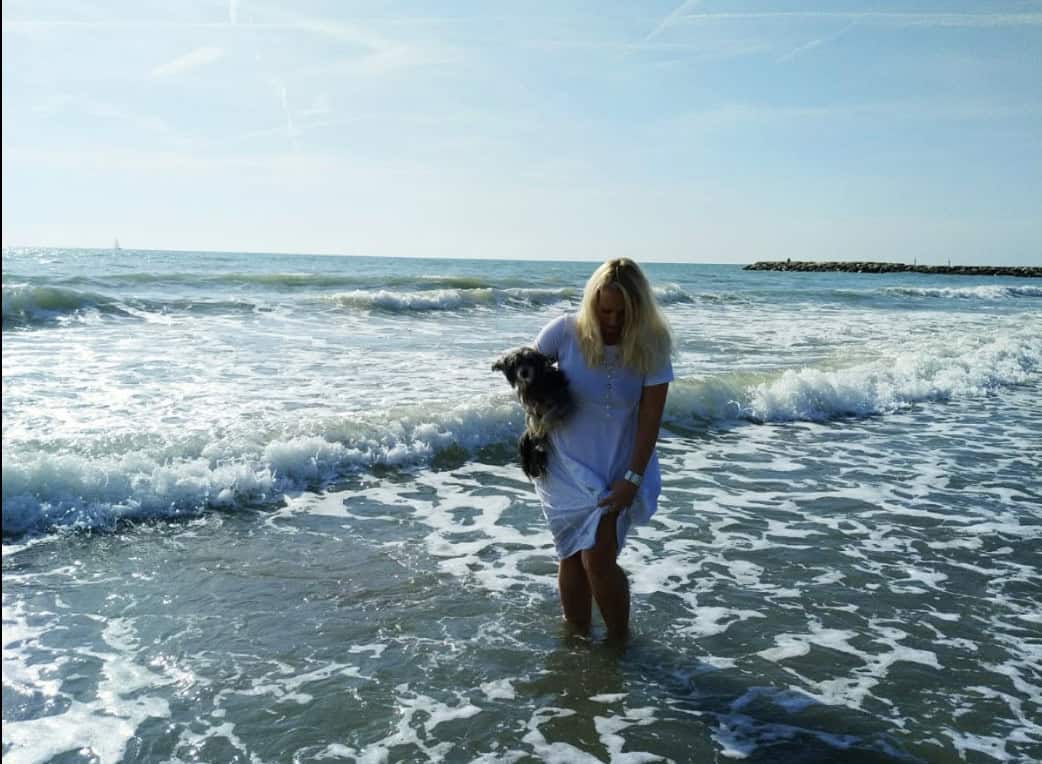
The coast of the Veneto region offers a number of specialized beaches and designated sections for visitors with dogs. However, the rules are not uniform. Some dog beaches allow dogs to enter and swim in the sea, while others only allow staying in a designated area. Conditions may change depending on the season, local regulations, and the operator’s rules.


Vacation with a Dog and Cat at Lake Garda
Lago di Garda is one of the most popular destinations for vacations with animals in the Veneto region. Its eastern shore offers pleasant promenades, historic towns, hiking trails, and beaches accessible to dogs. Popular spots include Peschiera del Garda, Lazise, Bardolino, Garda, and Malcesine.
One of the most famous dog beaches is Braccobaldo Beach in the Fornaci area near Peschiera del Garda. This equipped beach allows entry with dogs and offers rental of sunbeds and umbrellas, bowls, and pet food. Entry is charged. Before visiting, it is advisable to check the seasonal operation and entry conditions.
Lake Garda can also be explored from the deck of Navigazione Laghi’s excursion boats. According to the transport conditions valid in 2026, dogs with a withers height of up to 50 cm travel for free, while larger dogs are charged a reduced fare.
Dogs must be on a leash no longer than 1.5 meters, and the owner must have a muzzle available. Transport may be restricted during high occupancy of the vessel. For cats and other domestic animals, it is advisable to check the transport conditions directly with the carrier in advance. When visiting other beaches, it is important to respect local rules, as access for dogs to the water and the possibility of swimming may vary in different municipalities.
The Dolomites and Hiking with a Dog
The Dolomites in the province of Belluno offer a number of hiking trails that can also be enjoyed with dogs. The Cortina d’Ampezzo area even has its own Cortina Pet Friendly offer, including recommended walking tours, accommodations, mountain huts, and cable cars accessible to domestic animals.
Specific recommended hikes include a walk to the mountain lake Lago Ghedina, the Pian de Ra Spines route, or a trip to the mountain hut Malga Ra Stua. These routes are listed on the official tourist portal Cortina Pet Friendly, where visitors can also find other hiking options with dogs.
Selected cable cars can also be used with dogs. On the Faloria, Tofana, Averau, and 5 Torri cable cars, dogs travel for free regardless of size. On the Lagazuoi cable car, guide dogs and small dogs carried in arms travel for free, while others require a separate ticket. A leash and muzzle are required during transport.
In the Dolomiti d’Ampezzo Nature Park, dogs must be kept on a leash to avoid disturbing wildlife. The same obligation applies in the Dolomiti Bellunesi National Park. Before the trip, it is advisable to check the current status of hiking trails, cable car operations, and terrain difficulty with regard to the dog’s physical condition.
How to Choose a Pet-Friendly Hotel, Apartment, or Campsite in Veneto
The term pet-friendly means that the accommodation accepts domestic animals under certain conditions. However, it does not automatically mean that you can come with any dog or cat. Some hotels only accept smaller dogs, while others set a maximum number of animals per room. In campsites, domestic animals may only be allowed in selected mobile homes or on certain plots.
What to Check Before Booking
- Whether the accommodation accepts dogs, cats, or both.
- Whether there are restrictions based on the weight or size of the animal.
- Whether a daily or one-time fee is charged.
- Whether the animal can stay alone in the room or apartment.
- Whether it has access to common areas.
- How far the nearest suitable place for walking a dog is.
- Whether the accommodation offers outdoor space or its own garden.
- Whether there is a beach nearby with allowed dog access.
For longer stays, apartments, vacation homes, and mobile homes in campsites may be particularly suitable. Families traveling with dogs may appreciate accommodations with direct access to outdoor space and the possibility of regular walks.
Union Lido Dog Camp in Cavallino-Treporti
An example of a modern resort offering extensive facilities for vacations with dogs is Union Lido Mare in Cavallino-Treporti. Its specialized Dog Camp section includes accommodations adapted for stays with dogs, a fenced dog beach of 1,000 m² with sea access, a separate pool for dogs, and areas for free movement and agility. Dog sitting, training, and dog showers are also available.
Union Lido shows that traveling with dogs is no longer just a matter of choosing accommodations that tolerate pets. Specialized services and equipment are becoming an important part of the offer of modern tourist resorts.


Hu Eraclea Mare: A New Generation of Pet-Friendly Vacations
The approach to traveling with pets is gradually changing. While travelers used to primarily look for accommodations where dogs were welcome, modern tourist resorts today offer an increasingly wide range of services and facilities tailored to the needs of four-legged guests.
An example of this trend is the new resort hu Eraclea Mare on the Venetian coast, scheduled to open in May 2027. Accommodation for the 2027 season can already be booked, with up to two pets allowed in one mobile home. The extensive tourist complex will also include facilities specifically designed for dogs.
In addition to a designated dog beach, there will be runs, a water spray park, a pool area for dogs, and a relaxation area. The services offered will include showers, a dog bar, pet supplies, dog sitting, and restaurants where guests can come with their four-legged companions. The resort is also preparing welcome packages and selected types of accommodations adapted for stays with animals.
These services demonstrate that pet-friendly tourism is becoming a significant part of tourism development. The needs of pets now influence not only the choice of accommodation but also the design of recreational spaces and the offer of accompanying services. The new hu Eraclea Mare resort thus represents an example of modern tourist infrastructure that responds to the growing interest in joint travel for people and their animal companions.
Italy and Rules for Dogs in Public
When walking a dog in Italian cities and publicly accessible places, it is necessary to respect the relevant regulations and local ordinances. In urban areas and publicly accessible places, a leash with a maximum length of 1.5 meters is generally used unless it is a designated area with different rules.
The owner must also have a muzzle available, which must be used in situations specified by regulations or at the request of the relevant authorities. Dog owners are also required to clean up after their pets. Some historical monuments, museums, churches, or nature reserves may restrict or prohibit entry with animals.
How to Make the First Days of Vacation Easier for Your Pet
A change of environment, a long journey, and new stimuli can be stressful for dogs and cats. Upon arrival, it is advisable to give the animal enough time to rest and gradually get acquainted with the surroundings. A familiar bed, favorite blanket, known food, and maintaining a regular daily routine can help.
In the summer months, it is important to adapt walks to the temperatures. Hot sidewalks, sand, and stone surfaces can cause paw injuries. When staying by the sea, it is necessary to ensure enough drinking water and prevent excessive drinking of salty seawater. It is also useful to find the nearest veterinary clinic in advance, especially when traveling with an older or chronically ill animal.
Common Mistakes When Traveling with Animals to Veneto
Although traveling with pets within the European Union is relatively simple, some mistakes can cause complications even before departure. The most common include an invalid rabies vaccination, missing European passports, or incorrect animal identification details.
Another problem may be booking a hotel without confirming that the specific animal meets the accommodation conditions. When staying by the sea, visitors sometimes assume that a dog can enter any beach. In reality, it is necessary to follow the rules of the specific beach section. Similarly, it is advisable to check the transport conditions of trains, boats, and other public transport in advance.
Veneto as a Destination for Vacations with Pets
The Veneto region offers diverse opportunities for traveling with dogs and cats. From seaside resorts on the Adriatic coast through historic cities and the Venetian lagoon to Lake Garda and the Dolomites, visitors can choose an environment that suits the needs of their pets.
An important part of planning is choosing suitable accommodation, safe transportation, and activities that consider the age, health, and temperament of the animal. Thanks to common European rules and the developing offer of pet-friendly services, Veneto can be an attractive destination for a joint vacation where the four-legged family member doesn’t have to stay home.


This article is for informational purposes. Since veterinary requirements, transport conditions, and local rules may change, we recommend checking current information on the official websites of the relevant institutions, carriers, and accommodation providers before each trip.
Below we provide the relevant source:
Traveling with Pets and Other Animals within the EU