
Unique exhibition in Aquileia: Rare fragments of the Gospel of Mark from Venice, Cividale, and Prague will temporarily come together after seven centuries
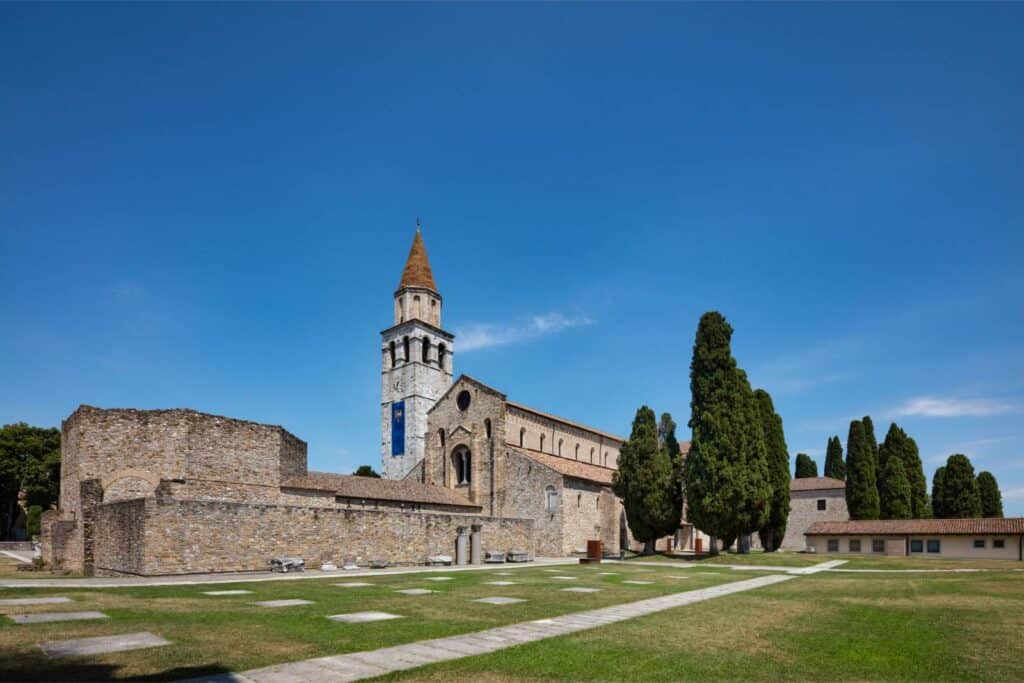
Unique exhibition in Aquileia
After more than 1,400 years, the story of the Gospel of Mark is coming together again for a limited time in Aquileia. An extraordinary exhibition brings together two rare manuscript fragments kept in Prague and Venice, along with the Codex Forojuliensis from Cividale del Friuli, which originally included the Gospel of Mark. The exhibition at Palazzo Meizlik is open to the public from 13 September 2026 until 25 April 2027. The originals from Prague and Cividale, however, will be on display only during the first six weeks.
The Prague fragment is associated with Charles IV, who acquired it in Aquileia in 1354. On the occasion of the current exhibition, it has left the territory of the Czech Republic for the very first time. The Venetian part is today kept in the Treasury of St Mark’s Basilica. The exhibition thus, for a limited time, reconnects parts of one remarkable European story whose paths diverged centuries ago.
The exhibition is titled “Il Vangelo di Marco. Sette secoli. Tre frammenti. Un racconto europeo”, that is, “The Gospel of Mark. Seven centuries. Three fragments. One European story”.
The original Codex Forojuliensis and Cividale
The story begins with the manuscript known as the Codex Forojuliensis. This Gospel book was created in the 6th century and originally contained the four Gospels—Matthew, Mark, Luke, and John. It reached Aquileia around the middle of the 9th century and became an important liturgical book of the local church.
In the Middle Ages, the Gospel of Mark began to be directly associated with Saint Mark and venerated as an exceptionally valuable Christian relic. It was believed that the manuscript was directly connected with the evangelist Mark. Today we know that it dates from the 6th century, that is, from several centuries after Mark’s death.
Probably between the 12th and 13th centuries, the Gospel of Mark was separated from the rest of the codex. The original Codex Forojuliensis is now kept in Cividale del Friuli, while two parts of the Gospel of Mark made their way to Prague and Venice in the following centuries.
It is precisely their different fates that explain why the current exhibition in Aquileia is so extraordinary.
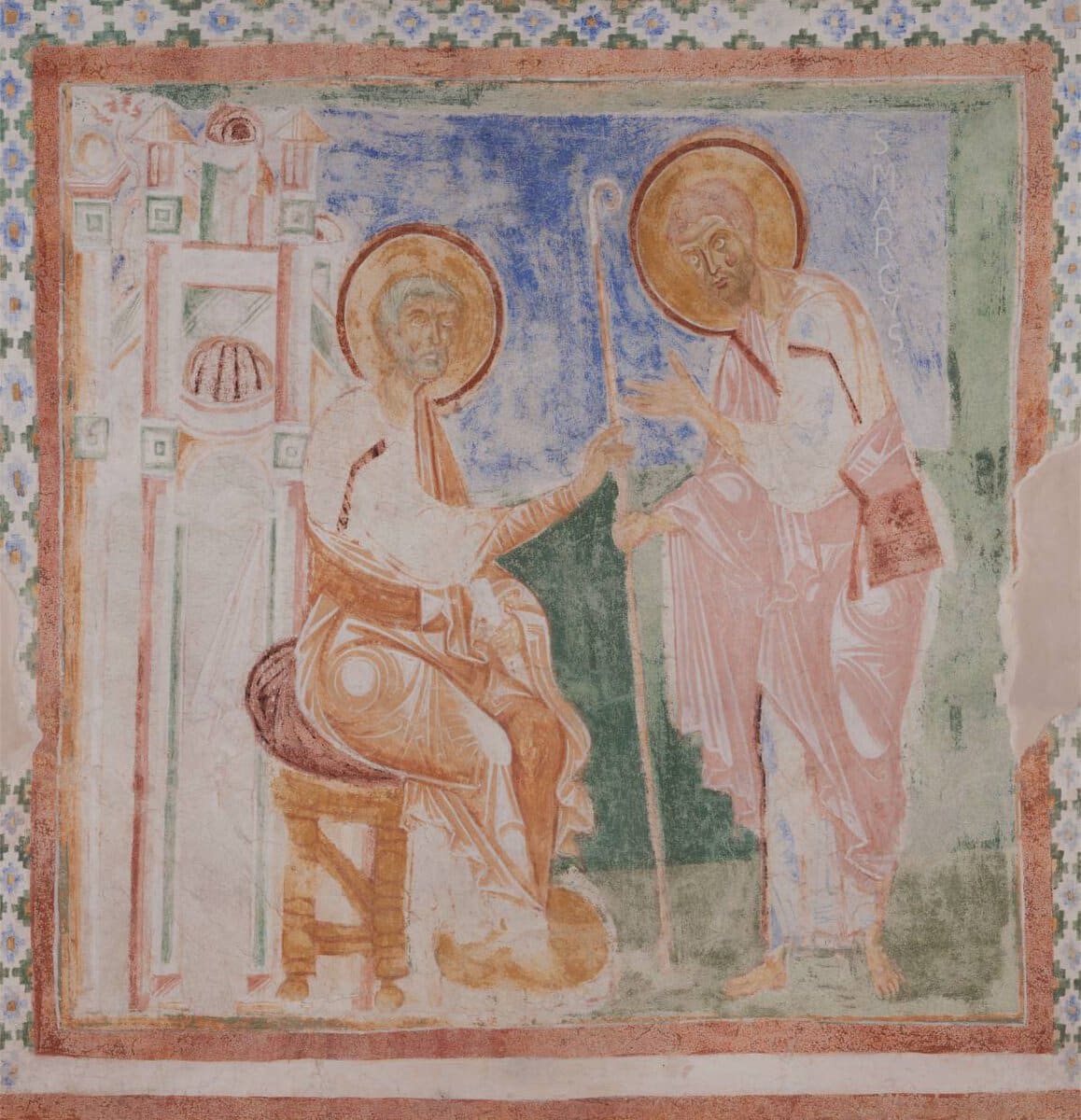
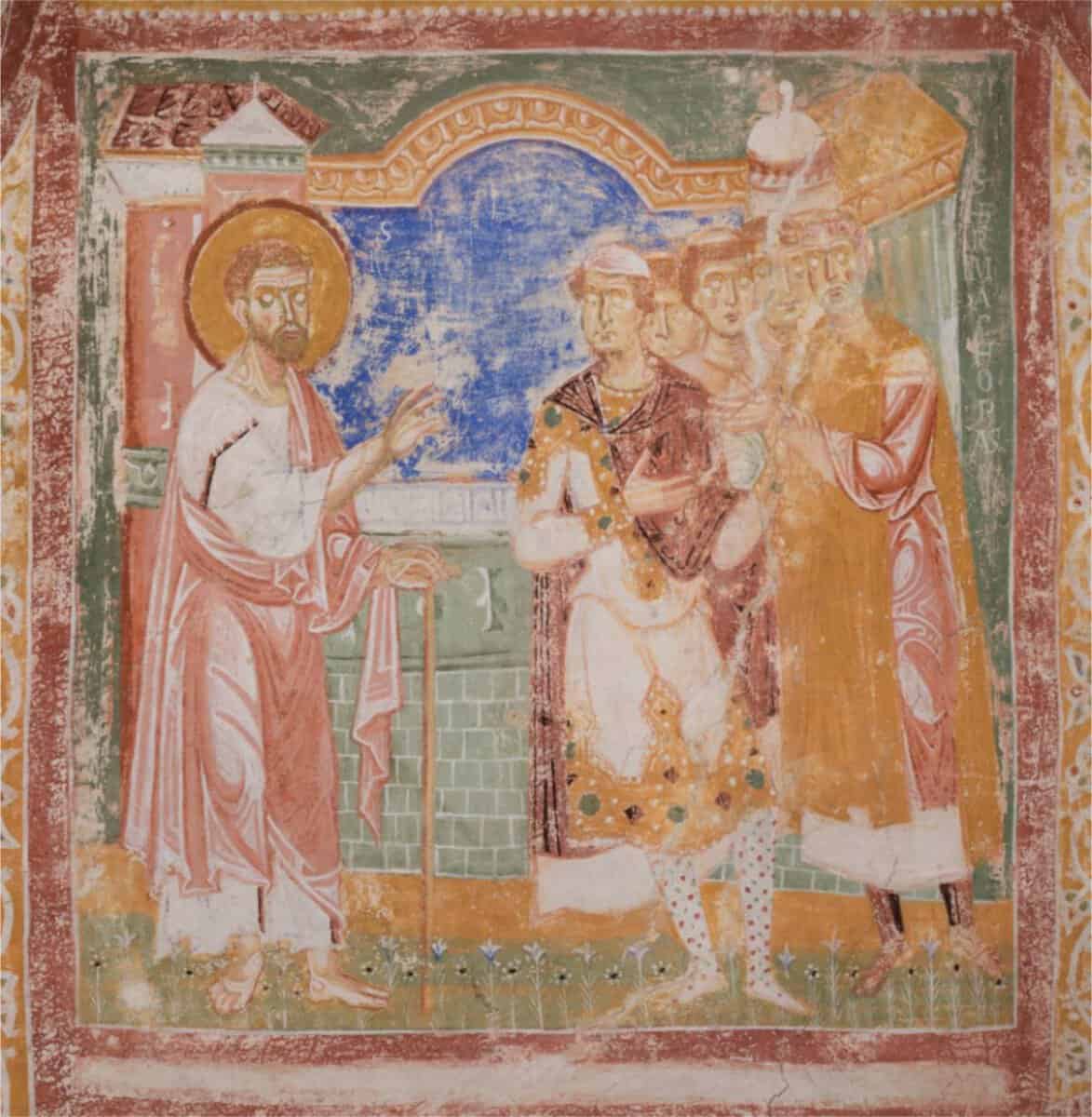
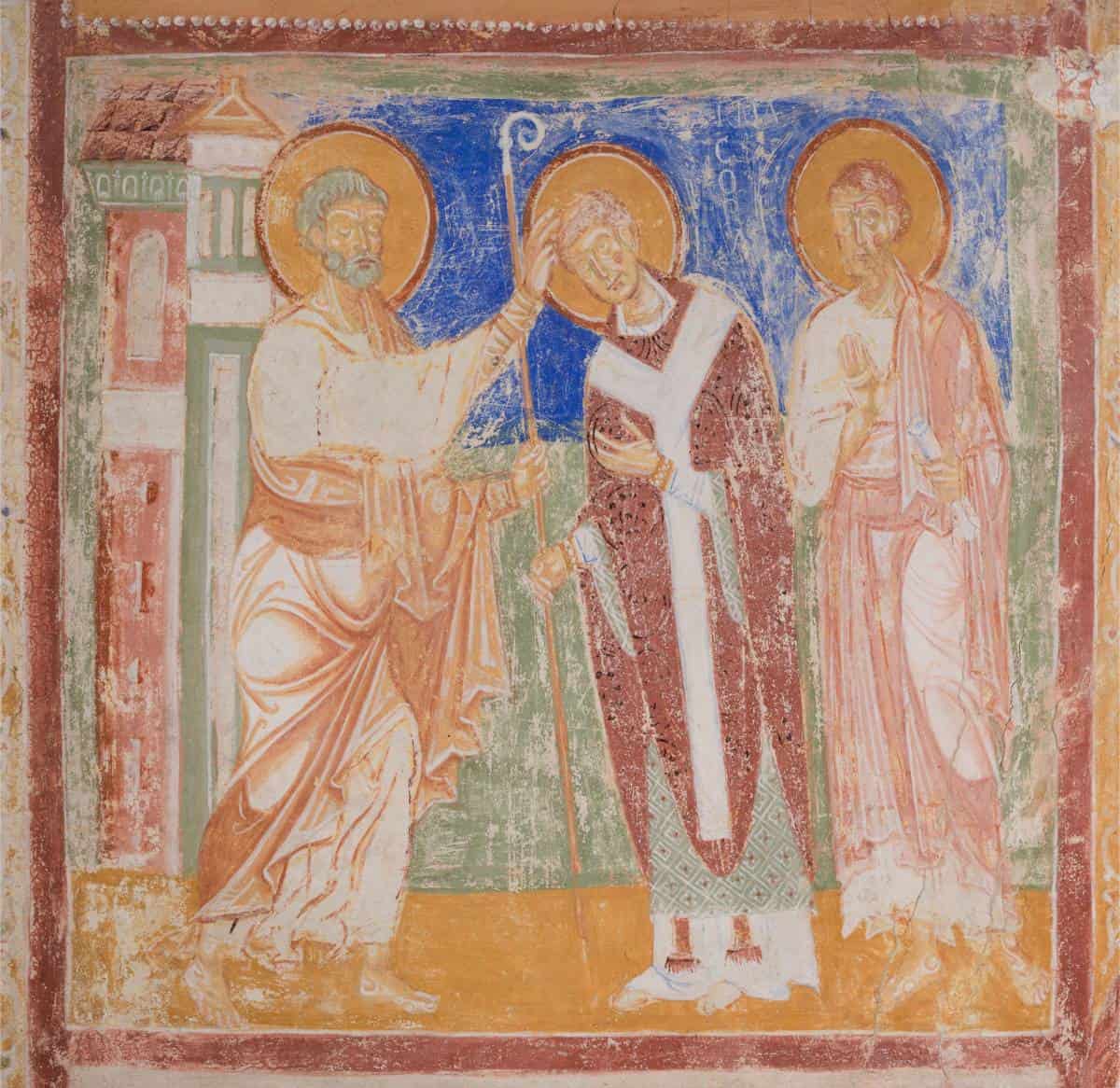
How part of the manuscript reached Charles IV and Prague
The Prague fragment’s story is precisely documented in historical records.
Charles IV passed through Friuli in 1354 on his way to Rome for his imperial coronation. The Patriarch of Aquileia at that time was Nicholas of Luxembourg, Charles’s half-brother.
Charles IV requested several leaves of the Gospel of Mark for St. Vitus Cathedral in Prague. Nicholas of Luxembourg granted him several leaves of the manuscript.
A document dated 17 October 1354 confirms that the patriarch, with the consent of the chapter, donated to Charles IV, King of the Romans and of Bohemia, a portion of the Gospel of Mark known as Cim 1. This document is today kept in the Archive of Prague Castle and is part of the current exhibition.
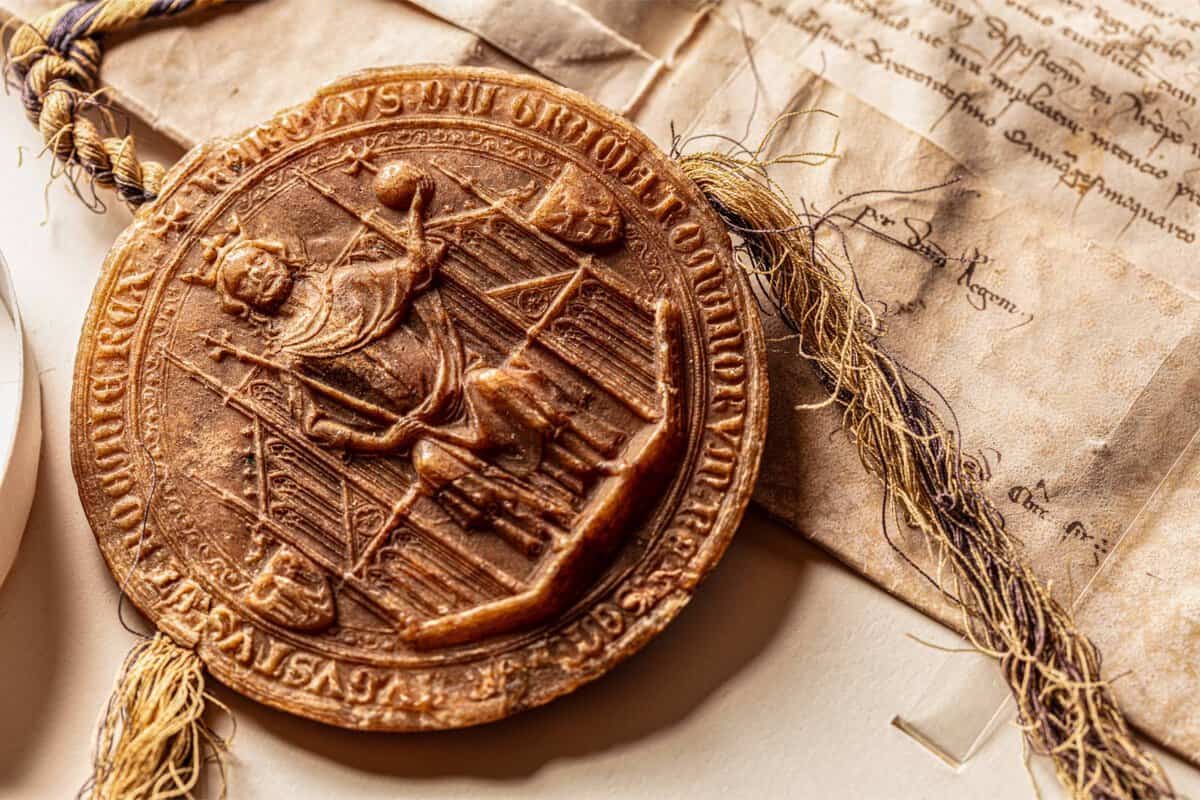
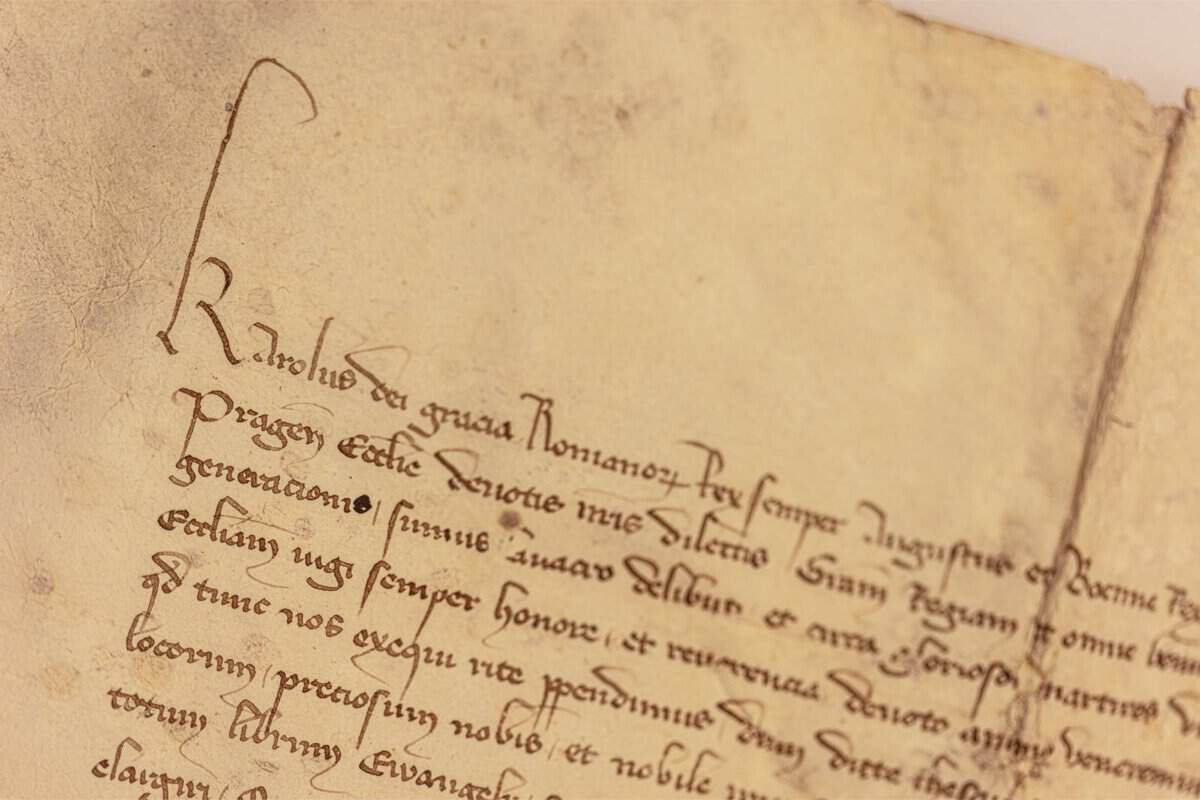
Seal of the Patriarch of Aquileia Nicholas of Luxembourg on the document of 17 October 1354, by which he confirms the donation of part of the Gospel of Mark to Charles IV. Archive of Prague Castle at the Office of the President of the Czech Republic, Prague. © Eye-studio
Charles IV subsequently donated the acquired leaves to the Prague church of Saints Vitus, Wenceslas, and Adalbert and set out the manner of their veneration. The preserved document was issued in Feltre on 31 October 1354 and also bears the ruler’s wax seal.
The fragment became part of the St. Vitus treasury and is today kept in Prague. It is now returning to Aquileia on an exceptional occasion and, in doing so, has left the territory of the Czech Republic for the very first time.
How another part reached Venice
The second fragment of the Gospel of Mark took a completely different path.
In 1420, the Republic of Venice took control of the territory of the Patriarchate of Aquileia. The remaining part of the Gospel of Mark was then transported by the Venetians to Venice and placed in St Mark’s Basilica. For the city, it had exceptional religious and symbolic significance.
Saint Mark is the patron saint of Venice, and his winged lion became the symbol of the city and of the entire former Republic of Venice. According to tradition, his relics were brought to Venice from Alexandria in the 9th century, and St Mark’s Basilica became one of the most important centers of his cult.
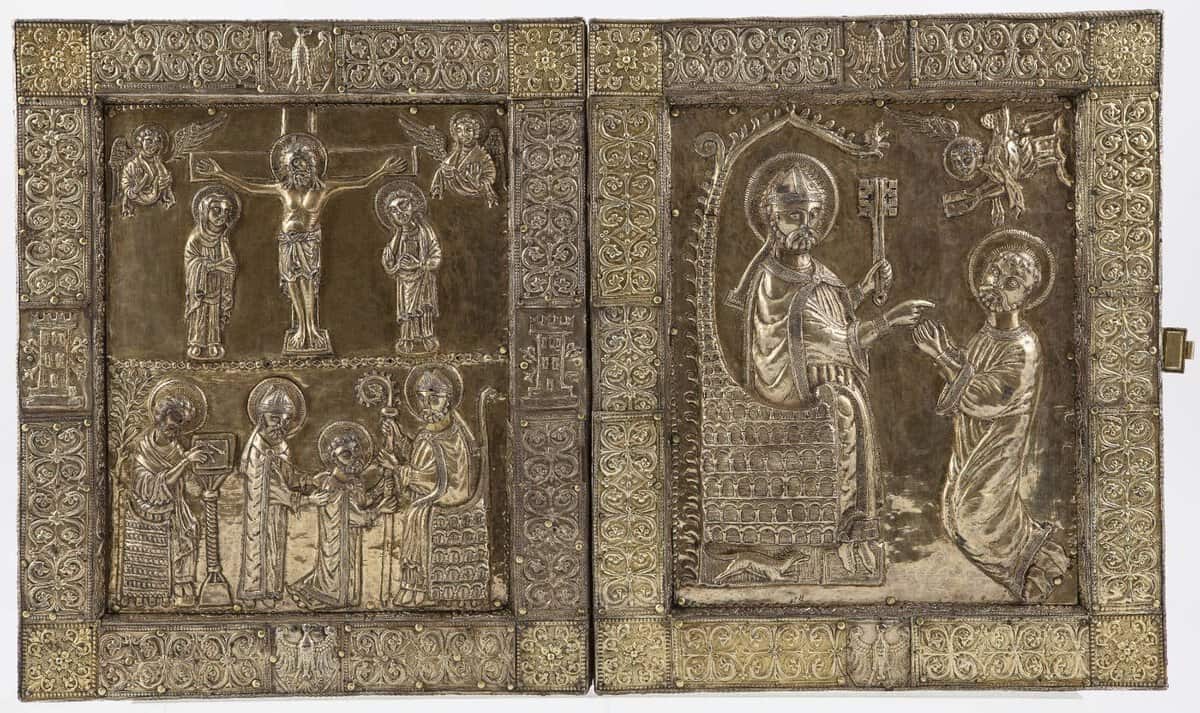
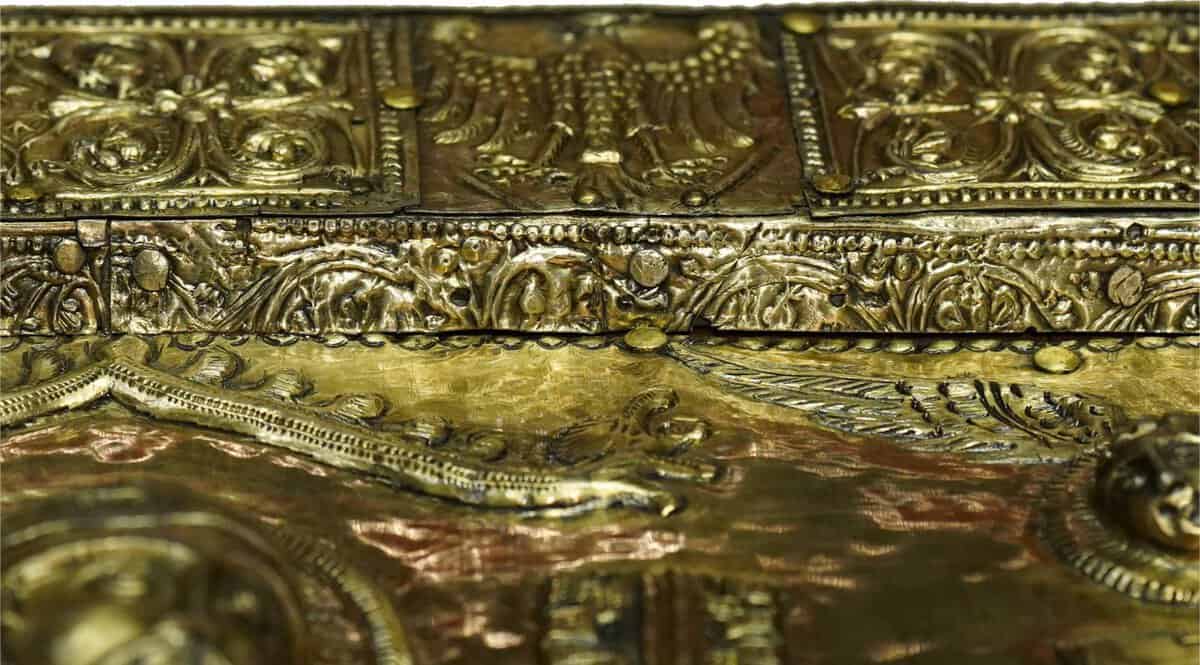
The Venetian fragment of the Gospel of Mark is today kept in the Treasury of St Mark’s Basilica. At the exhibition in Aquileia, it is presented in its reliquary case and will remain on display for the entire duration of the exhibition.
Why are the originals together for only six weeks
For visitors who want to see the original manuscripts, the timing of the visit is important.
The parchment leaves of the Prague fragment and the manuscript from Cividale are extremely sensitive to light and ultraviolet radiation. Long-term display could damage them.
The originals from Prague and Cividale will therefore be exhibited in Aquileia only during the first six weeks. After that, they will be replaced by high-resolution digital reproductions. The Venetian part in its reliquary case will remain part of the exhibition until it ends in April 2027.
The exhibition offers much more than manuscripts
The exhibition at Palazzo Meizlik also presents the broader story of Saint Mark, Aquileia, and European history.
Visitors can see eight 7th-century ivory plaques from the so-called Throne of Saint Mark from Grado. They were loaned to Aquileia from the collections of the Castello Sforzesco in Milan and are complemented by a virtual reconstruction of the original throne.
Another exhibit is an early 9th-century architrave created for the Chapel of Saint Mark in the church of Sant’Eufemia. The exhibition also presents the reliquary of the martyrs Cantius, Cantianus, and Cantianilla, historical artworks, and other exhibits related to the history of Aquileia and the tradition of Saint Mark.
The modern part of the exhibition allows visitors to virtually leaf through historical codices. A separate immersive space presents the transformations of the basilica complex of Aquileia over more than a thousand years.
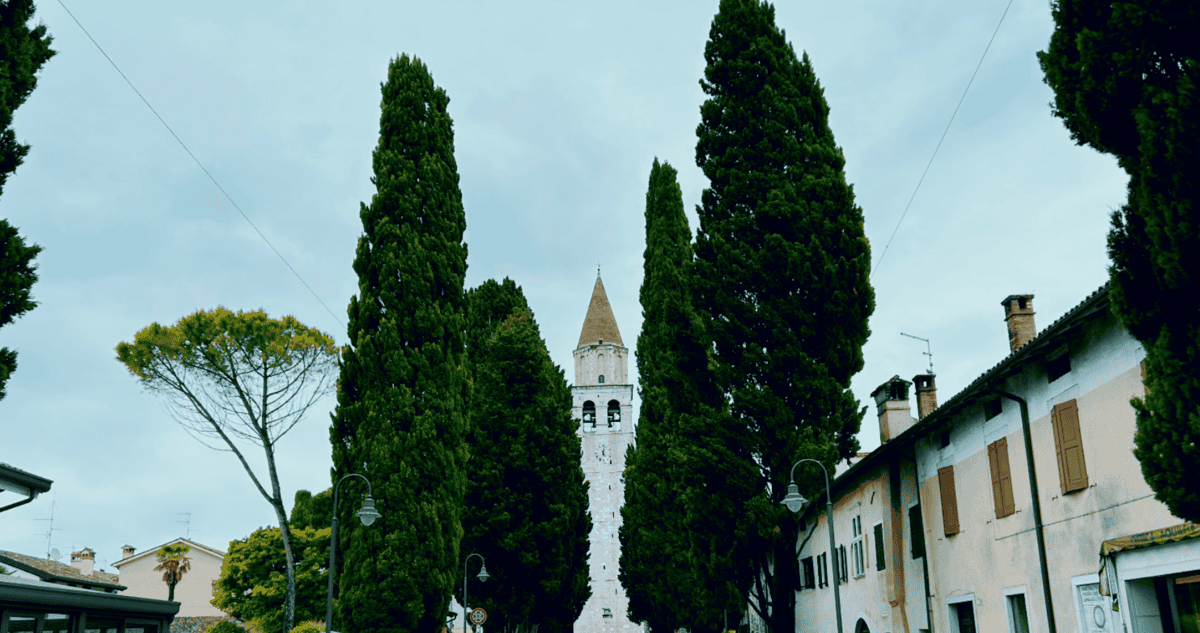


Aquileia was once one of Europe’s crossroads
The exhibition venue is no coincidence. Aquileia, founded by the Romans in 181 BC, was an important city of the Roman Empire.
After the introduction of religious freedom in 313, it became an important center for the spread of Christianity toward Central Europe and the Balkans. In the Middle Ages, its importance continued through the Patriarchate of Aquileia.
Today’s Aquileia has fewer than three thousand inhabitants, but its former importance is recalled by the extensive archaeological area, the remains of the Roman city and, above all, the famous basilica.
The basilica and early Christian mosaics
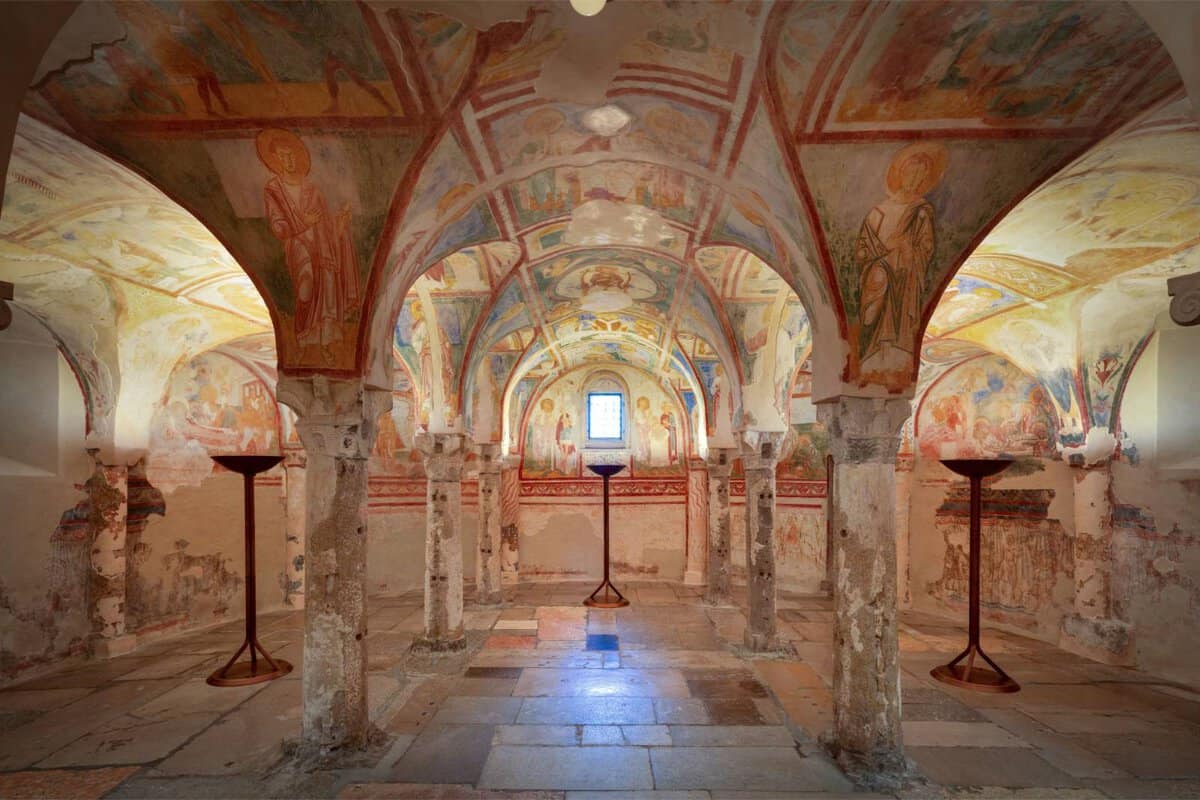
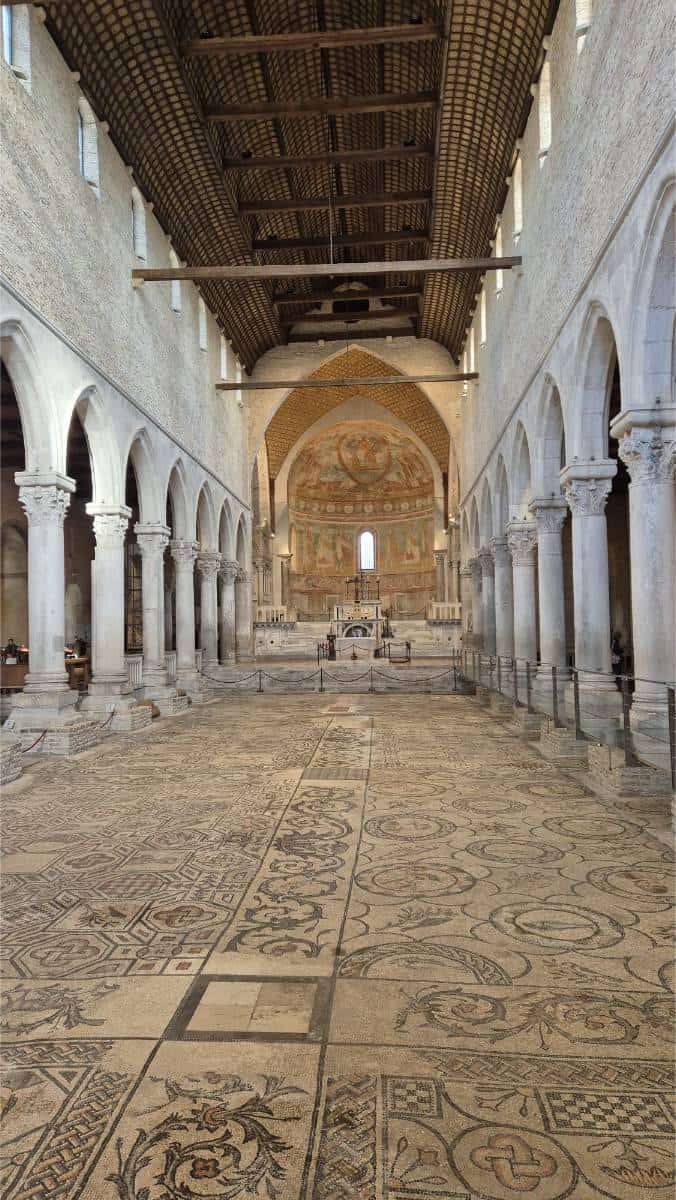
The Patriarchal Basilica of Aquileia is among the most important monuments of early Christianity in Europe.
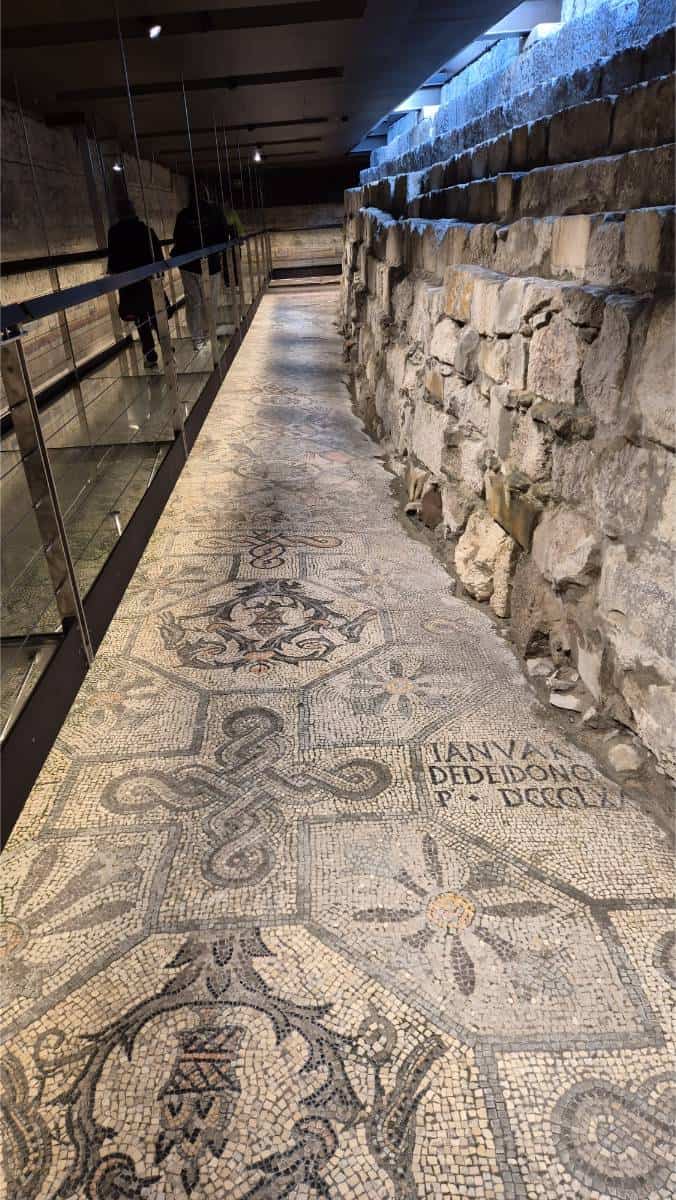
One of its most remarkable features lies directly beneath visitors’ feet. The extensive mosaic floor from the early 4th century is known for its multitude of animal, plant, and symbolic motifs.
The archaeological area of Aquileia and the Patriarchal Basilica have been listed as a UNESCO World Heritage Site since 1998.
A visit to the exhibition can thus be combined with a tour of the basilica, archaeological sites, and other places recalling the time when today’s small Aquileia was one of Europe’s important centers.
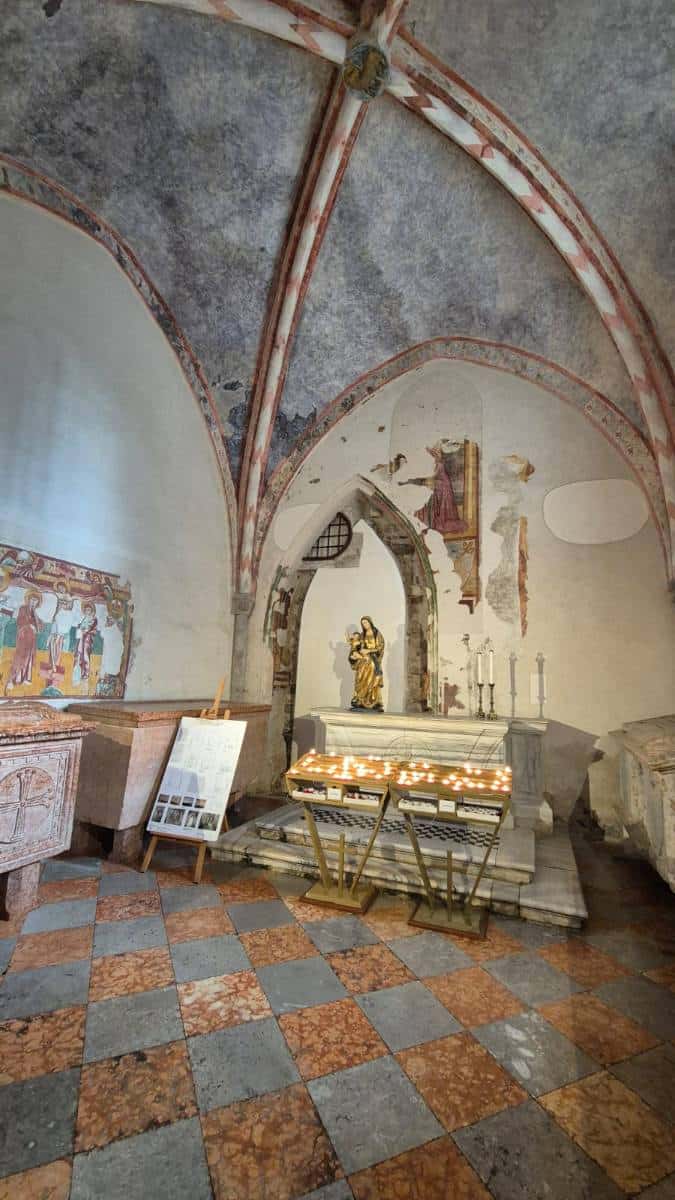
Aquileia lies beyond the borders of Veneto
Aquileia is administratively part of the Friuli Venezia Giulia region, meaning it lies outside the borders of Veneto. Its history, however, is closely connected with Venice, Saint Mark, and the entire northern Adriatic area.
The current exhibition connects the stories of Aquileia, Cividale del Friuli, Venice, and Prague, which intersected around the Gospel of Mark at different points in European history.
For visitors to Veneto, Aquileia is an interesting destination for a day trip, especially during the first six weeks of the exhibition, when the rare originals will be together in one place.
Practical information
The exhibition “Il Vangelo di Marco. Sette secoli. Tre frammenti. Un racconto europeo” is on display at Palazzo Meizlik, Via Patriarca Popone 7, in Aquileia.
It is open to the public from 13 September 2026 to 25 April 2027. The originals from Prague and Cividale will be exhibited during the first six weeks.
Standard admission costs 5 euros. When purchasing online, 1 euro is added as a presale fee. Visitors with a ticket to the basilica complex and the Domus di Tito Macro can, under the specified conditions, purchase admission to the exhibition for 2 euros.
Children and young people up to 18 years of age, journalists, tour guides, holders of the FVG Card, and other selected groups have free admission.
In September, Palazzo Meizlik is open every day from 10:00 to 19:00. Opening hours change in the following months according to the season.